Category Archives: homemade

Kimchi Restaurant’s "Korean Beef"

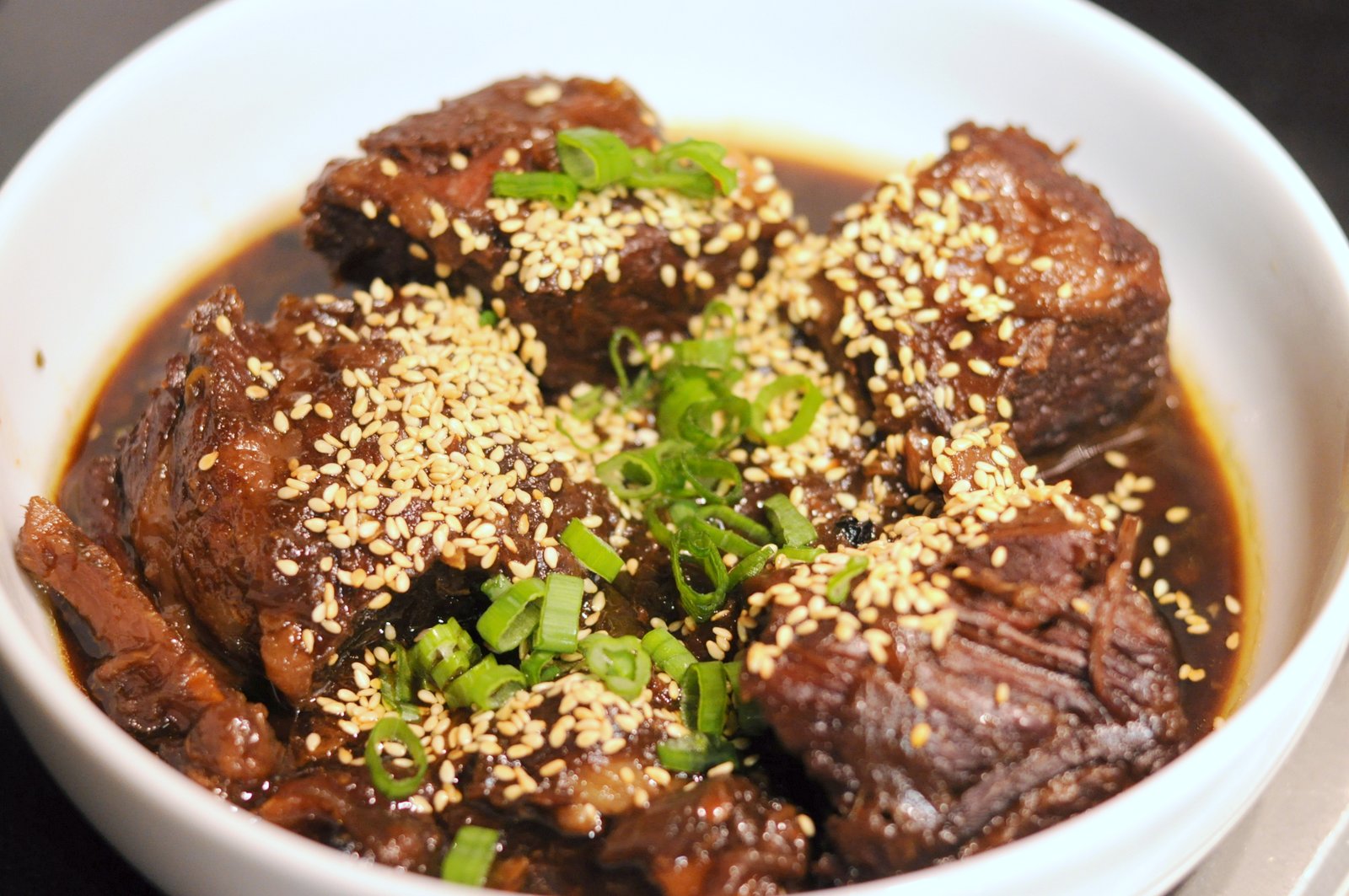
One of the treats I had growing up in Manila in the late 80s was to visit a restaurant called Kimchi, a Korean restaurant similar to the California fast food chain Yoshinoya. They had two main specialties: BBQ Chicken and “Korean Beef,” a stew of the most tender short ribs swimming in the rich thin sauce that was dark, sweet, and slightly hot, topped with chopped scallions and sesame seeds.
It was my favorite but was twice as expensive as the barbecued chicken I often settled for. The chicken was good in its own right but did not provide the same kind of close-your-eyes flavor explosion as the sesame short rib stew.  The Korean Beef’s sauce was good enough to fight for and drizzle on unlimited bowls of rice. It was so delicious and multi-faceted that never in my wildest dreams did I think it could ever be replicated in any home kitchen,  much less in mine.
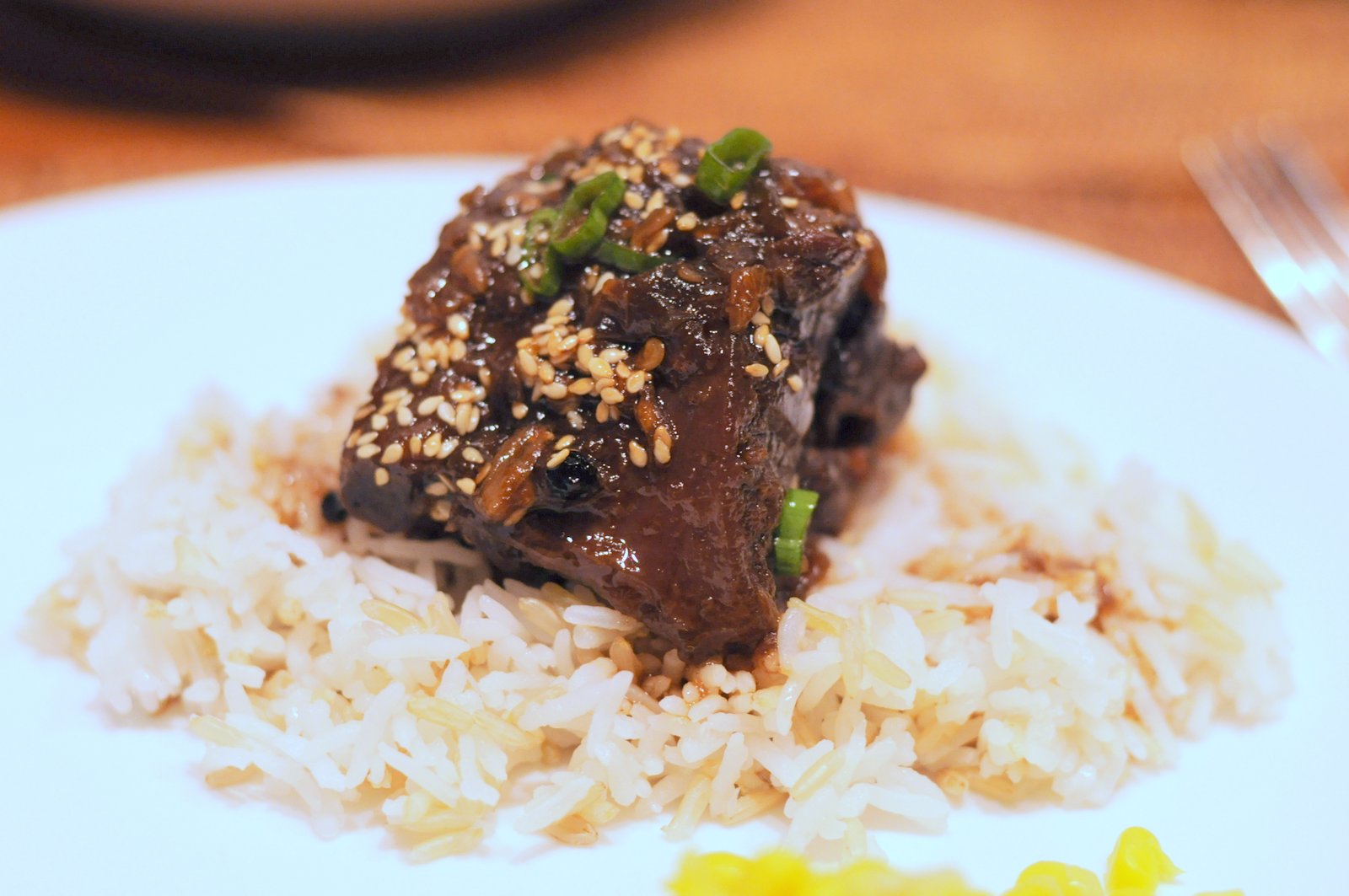

Fast forward to a couple of decades and a whole continent later, I made my first attempt based on an old recipe I found online, and after years of trial-and-error revisions, now I get to share my version with you! Enjoy!
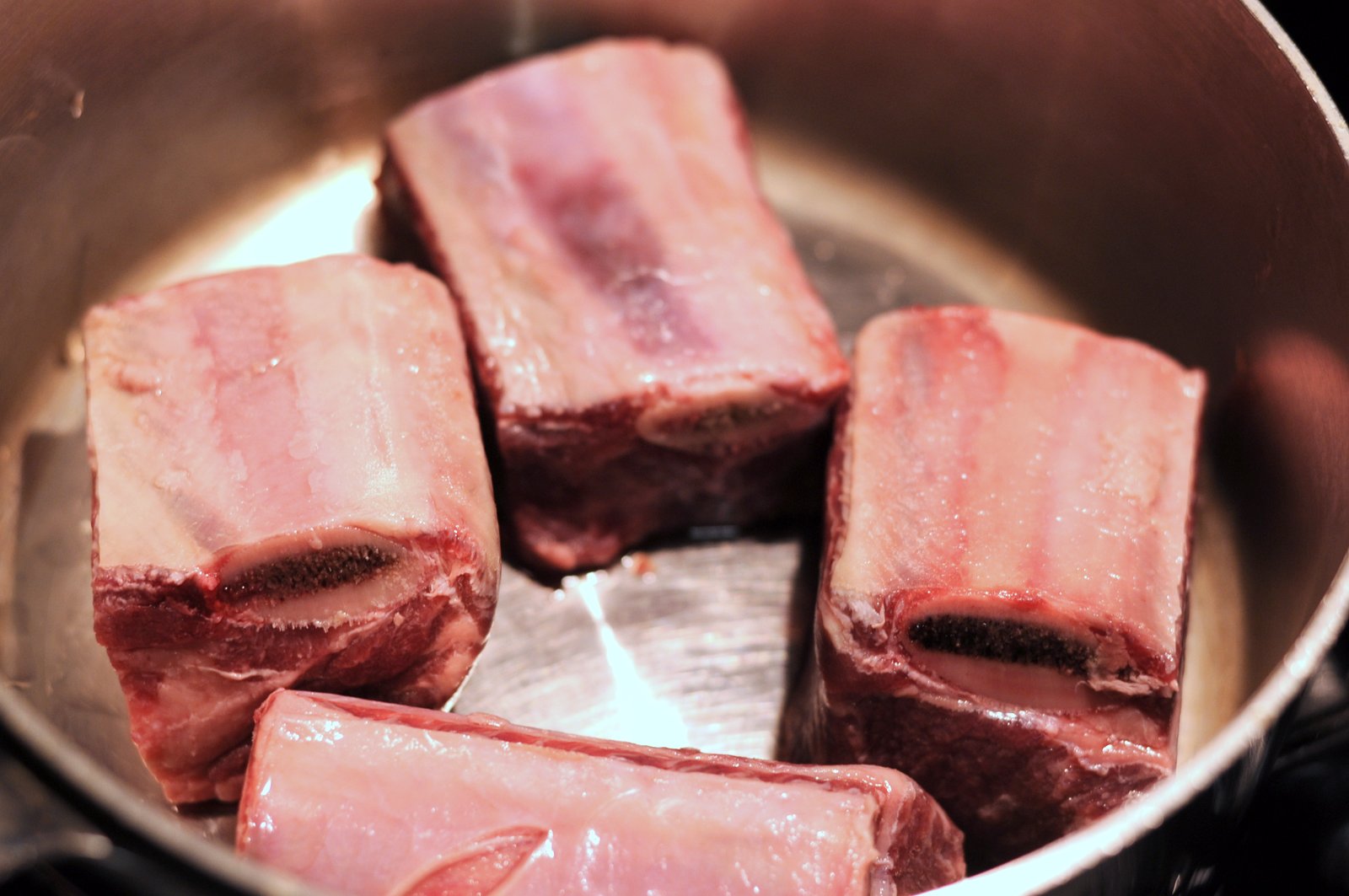
We begin by placing the short ribs meat-side down in a good pot.

Add all the other ingredients: one whole sliced onion, one head peeled garlic, one chili pepper, bay leaves, and peppercorns.
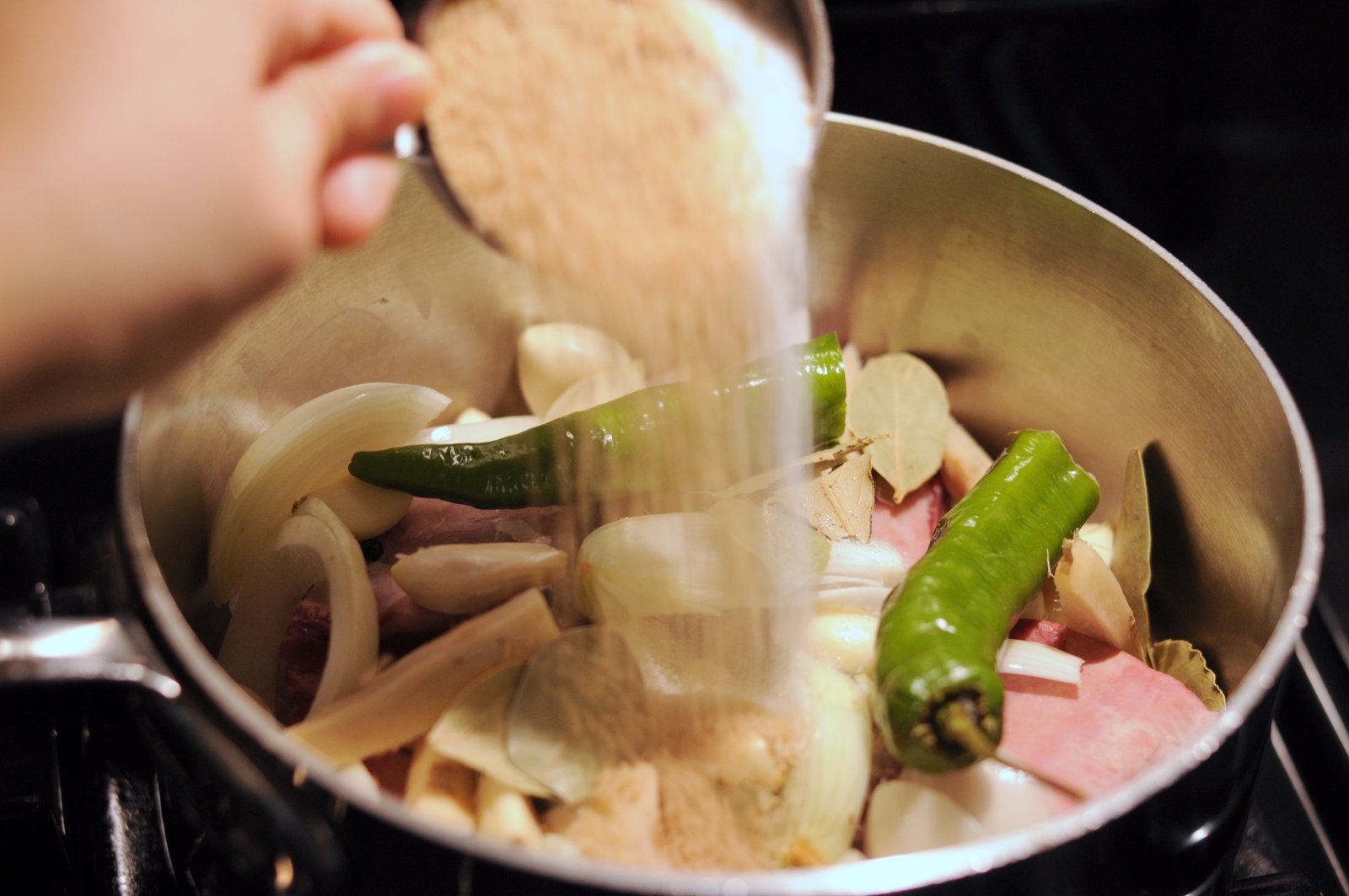
 Add the sugar. Don’t be shy.
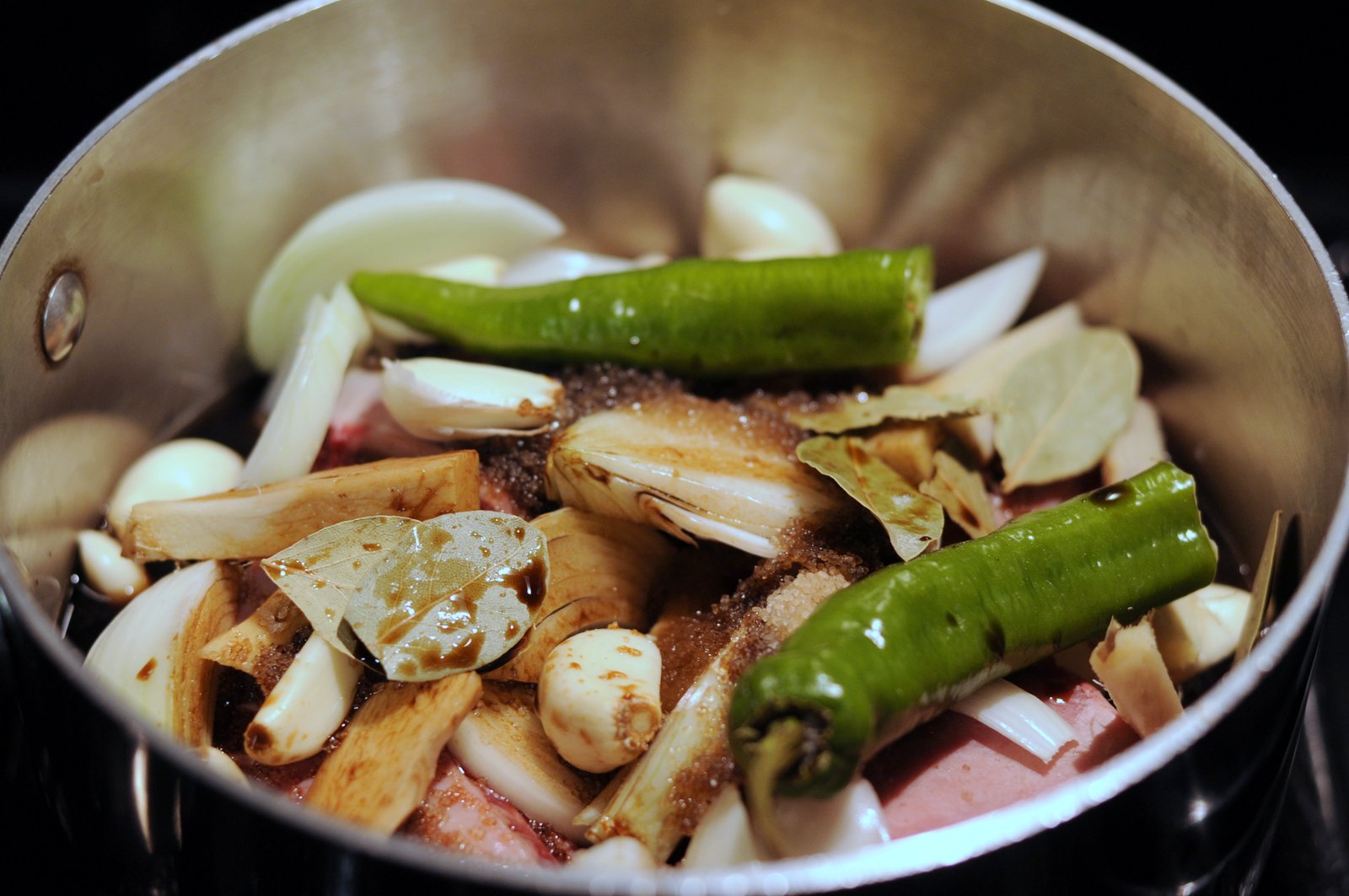
Add equal parts soy sauce and water. Simmer on low heat covered for about 2 hours.
 After thirty minutes.
 
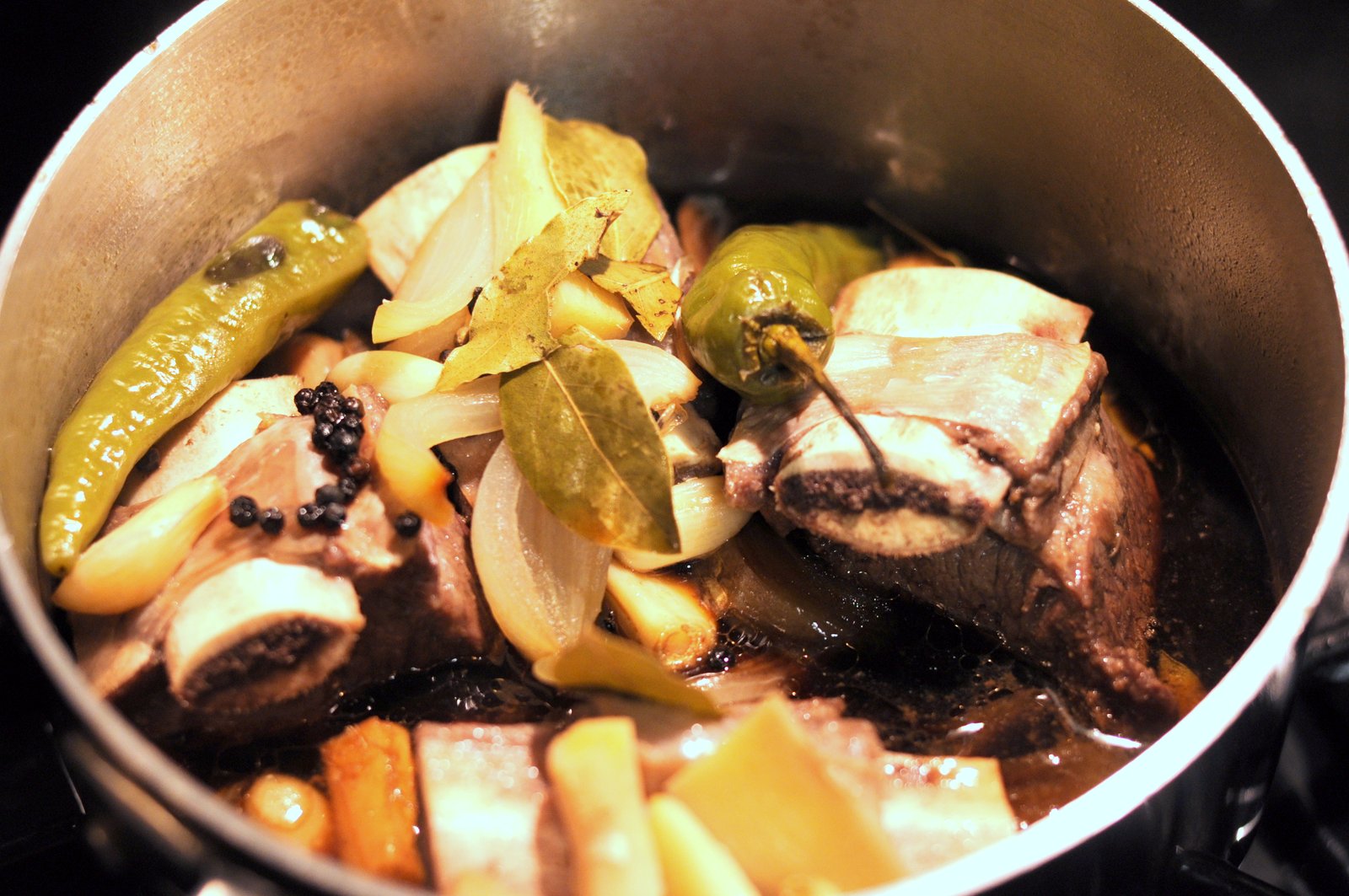
After one hour.
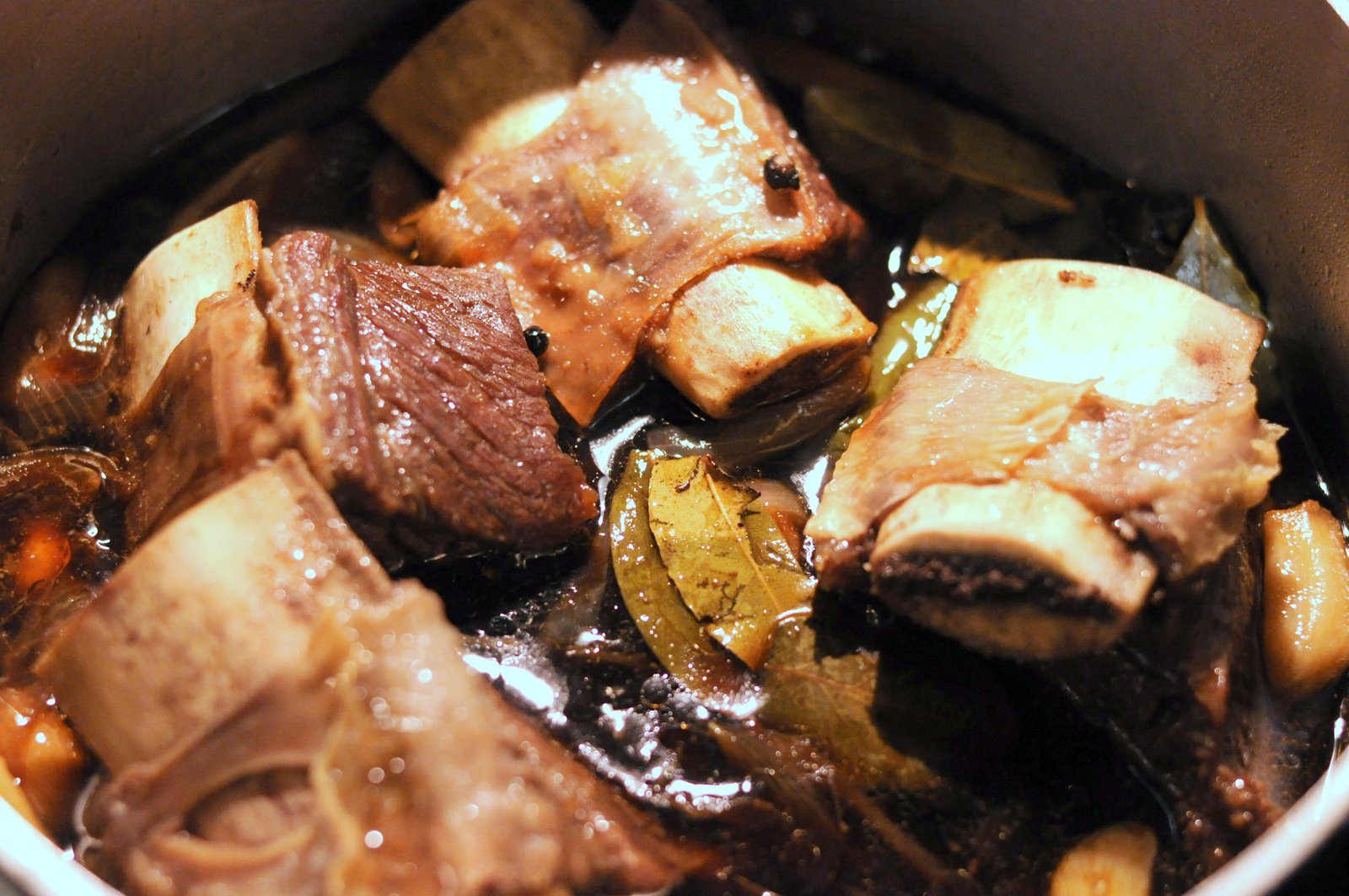
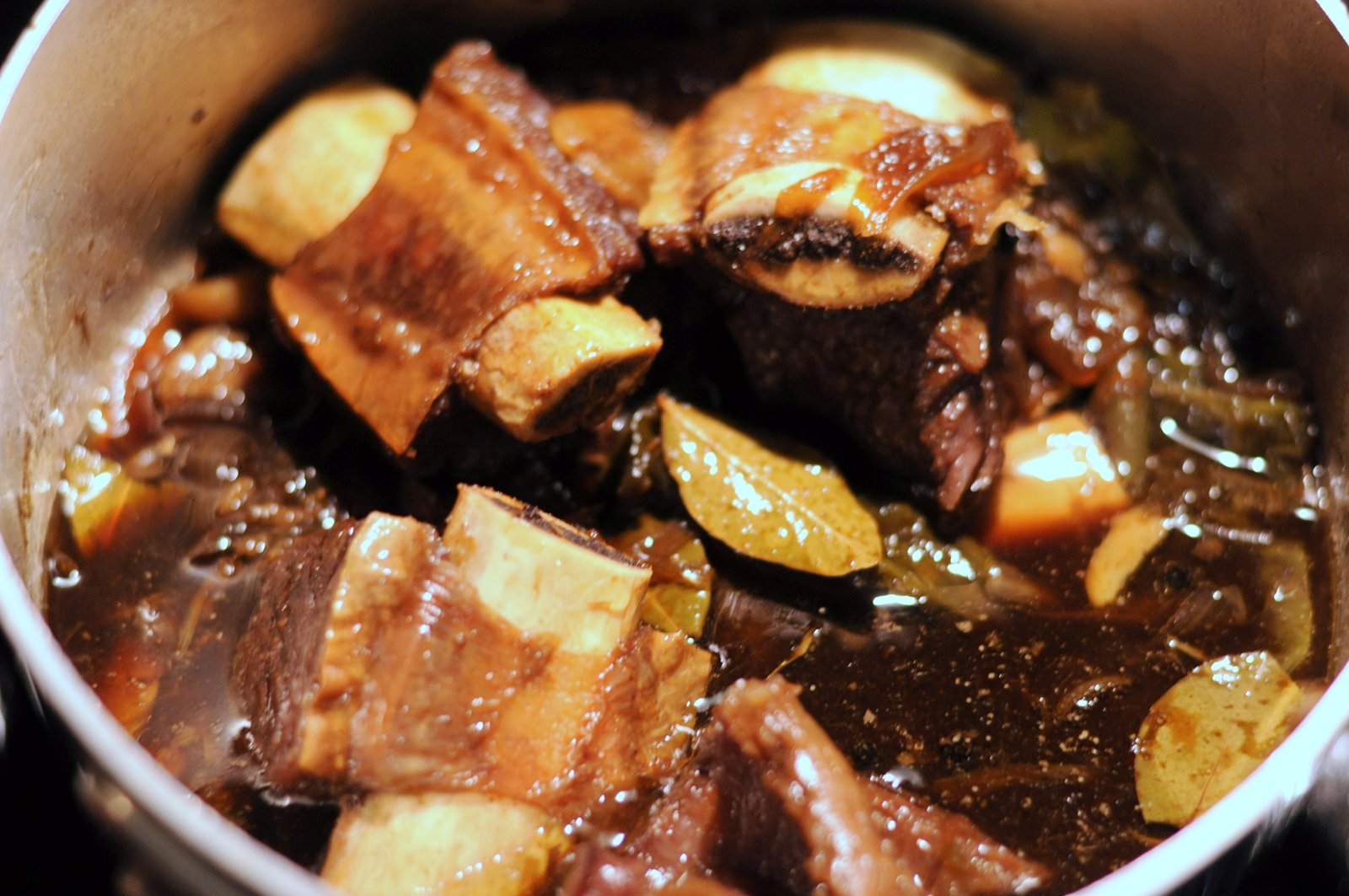
 And done. The meat is falling off the bone and has achieved an almost gelatinous texture.
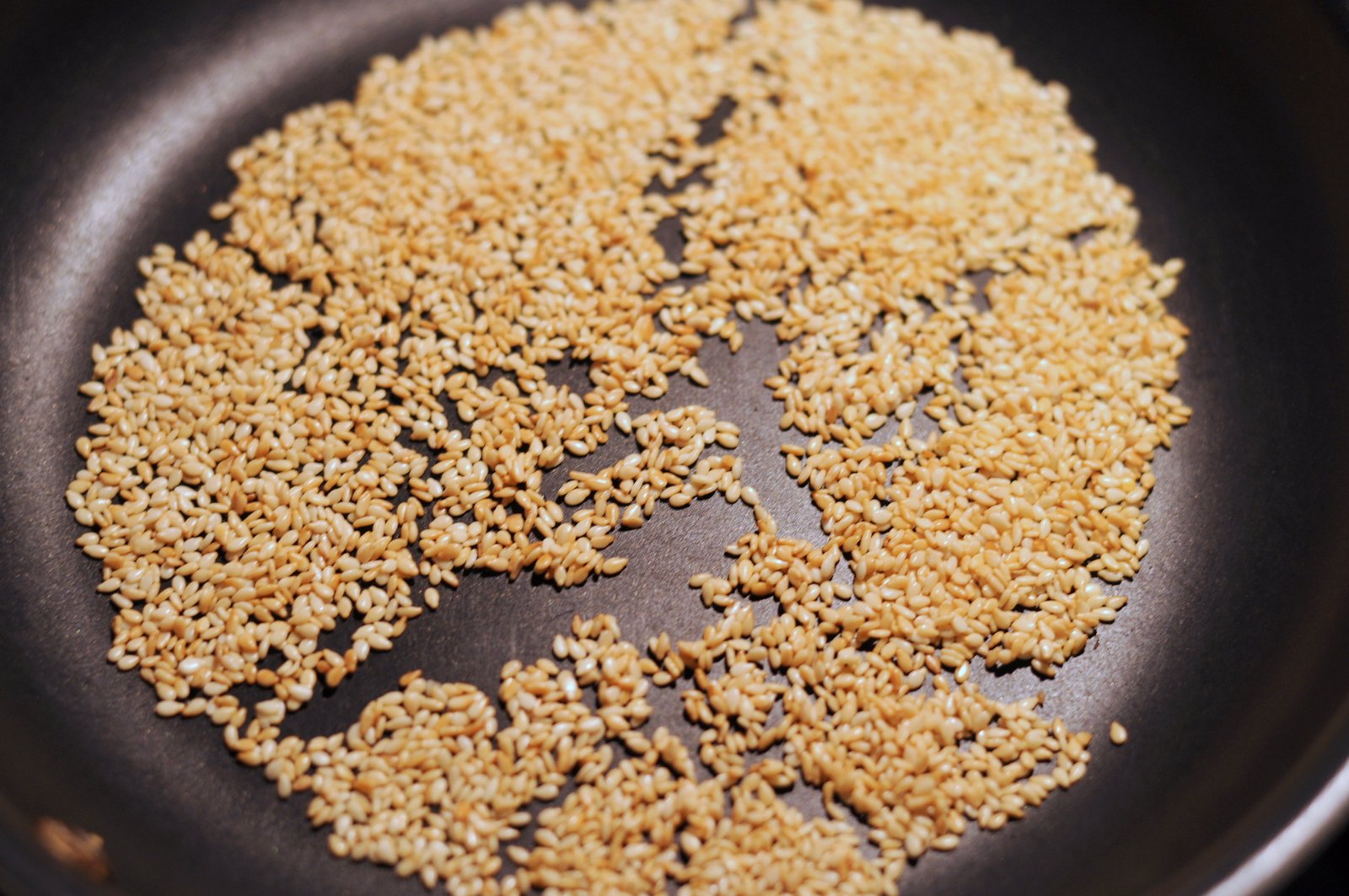
Roast some sesame seeds in a pan until brown. This releases the flavor of the seeds and gives it a nice roasted flavor when you bite on them. Try it!
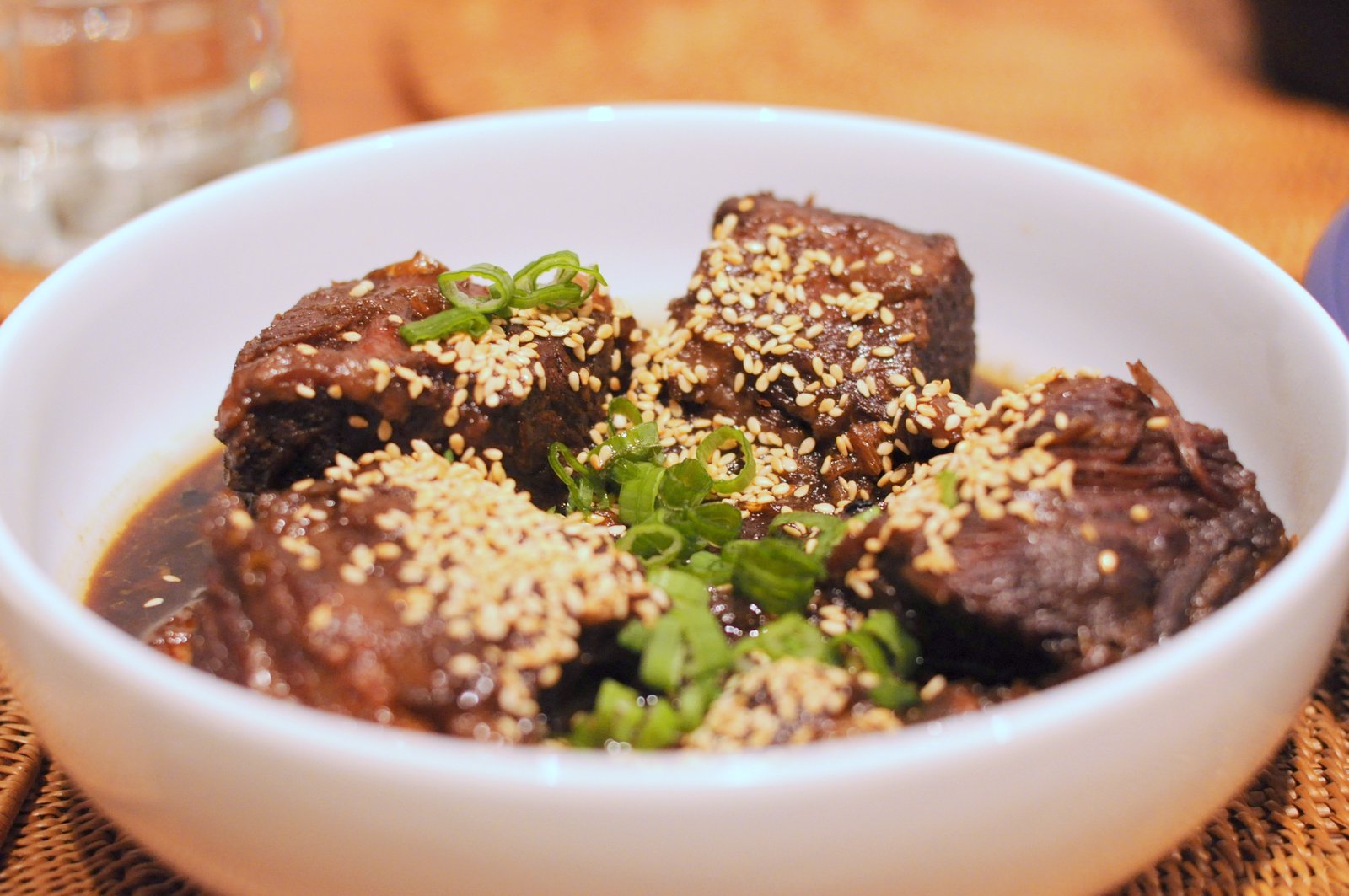
The secret of this stew is the slow cooking time. Keeping it in a low simmer allows the meat to soften without falling apart or burning, meshing with the flavors of the sauce. Here it is served with a topping of roasted sesame seeds and chopped scallions.
Serve with rice. This sauce, I swear to God, is worth fighting for.
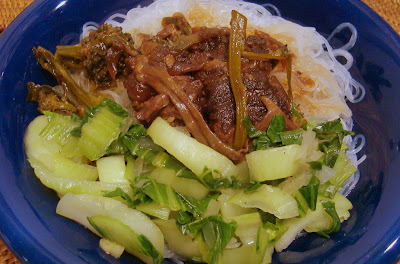
I use the leftover sauce and pieces of meat in a noodle dish I like. Enjoy!

Kimchi Restaurant’s “Korean Beef” Stew

1-2 lbs beef short ribs, cut crosswise (not flanken)
1 part dark soy sauce (Filipino brand preferred, Chinese variety is okay. Do not use Kikkoman!)
1 part water
1 part white or brown sugar
1 head garlic, peeled
1 onion, cut in half
1 piece ginger, the size of two thumbs, quartered
4 bay leaves
1 large Korean or Jalapeno pepper cut in half
10 peppercorns
1 tablespoon sesame seeds,  roasted in a pan until brown

In a good pot, combine all the ingredients except for the sesame seeds and the scallions. Simmer on low heat for two hours or until the meat is tender. Top with roasted sesame seeds and scallions and serve with rice.
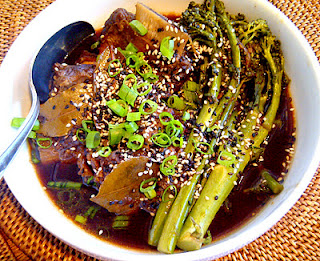
You can add some vegetables on the side at the last minute.
Here I added broccolini, but choy sum and bokchoy would also work.

 Here are the leftovers served over vermicelli and a side of sauteed bokchoy.
Recipe here.

Incidentally, upon searching for the original source of this recipe to credit, I stumbled across a distant cousin of mine who actually obsessed about the same dish too! Here is her version.

Chicken with Nasi Goreng Paste

My cooking is greatly influenced by Filipino cuisine, in which meats are stewed for hours and vegetables are frequently overcooked to a soft mush. A lot of it is done the previous night and reheated, finished or broiled the following day, a practice that requires a lot of planning and makes spontaneous meal options impossible, and cooking small batches a waste of my time.
 
For quick meals we have relied on the quickness of fish and salads, tacos and wraps, protein sources that need only a little cooking and some assembly for a tasty meal.

Chicken with Nasi Goreng Paste, Sauteed bokchoy on the side.

So I’m very happy to be recently leaning towards a happy medium in my cooking, one that is not too slow or too fast (i.e., often cold), which focuses on simple flavors and limited ingredients, with a preparation time of thirty minutes or so.

I wanted to make something similar to my simple chicken curry, but didn’t want to bend over backwards buying ingredients I didn’t already have. Then I remembered that I had a jar of Nasi Goreng Paste lying around. It is a mix of peppers, tomatoes and spices used to flavor fried rice in Indonesian cooking. I’ve had it for a while but never found the time to learn how to make Nasi Goreng. So I decided to experiment and see how the paste would fare as a flavor base for another quick chicken stew.

 I began by smothering four chicken pieces in two tablespoons of nasi goreng paste.

I seared them on both sides in a hot pan.

Then I added a whole sliced onion.
Poured in a quarter cup of water, juice from one lemon, and and simmered it covered for 30 minutes. 
The sauce becomes rich and thick as the chicken cooks.
I mixed in a handful of cilantro leaves.
And served it with some sautéed bokchoy.

I enjoyed the heat and boldness of this dish, which complemented the crunch and simplicity of the bokchoy. The trick to cooking meats without marinating often lies in serving it with a flavorful sauce. The chicken turned out soft, moist and flavorful. The onions were a good texture companion to the dish.
Chicken with Nasi Goreng Paste
4 chicken pieces
2 tablespoons Nasi Goreng paste (available at Asian food stores)
juice of one lemon
1 whole onion, sliced into rings
1 handful washed cilantro leaves
Smother chicken in paste then sear in a hot pan with oil. Add onions, 1/4 cup water and lemon juice and cover, simmering for 30 minutes on low heat. Add cilantro leaves and mix well. Serve with a vegetable side and rice. 

Fried Shishito Peppers

It was in Barcelona that I first had fried peppers. The smoky bar called Bar Rodrigo served them sizzling on a plate, and we chewed on their crunchy salty bodies chased with gulps of wine. I fell in love.
 
I’ve always enjoyed fried peppers in tapas bars because they are sweet and have the right kind of heat along with crisp skins and the bite of rock salt. Pimentos de Padrons are commonly used in Spanish cuisine, but in Asian restaurants (and recently in modern bars), shishito peppers are the pepper of choice. They aren’t normally available in supermarkets yet but Farmer’s Markets seem to be picking them up. In New York, Union Square Market  reportedly carries them, as do Asian supermarkets like Han Ah Rheum and Sunrise Mart.
Fried shishito peppers, better made by a Japanese friend in Woodside.

I picked up some shishito peppers (in the middle) from Sunrise Mart in the East Village.
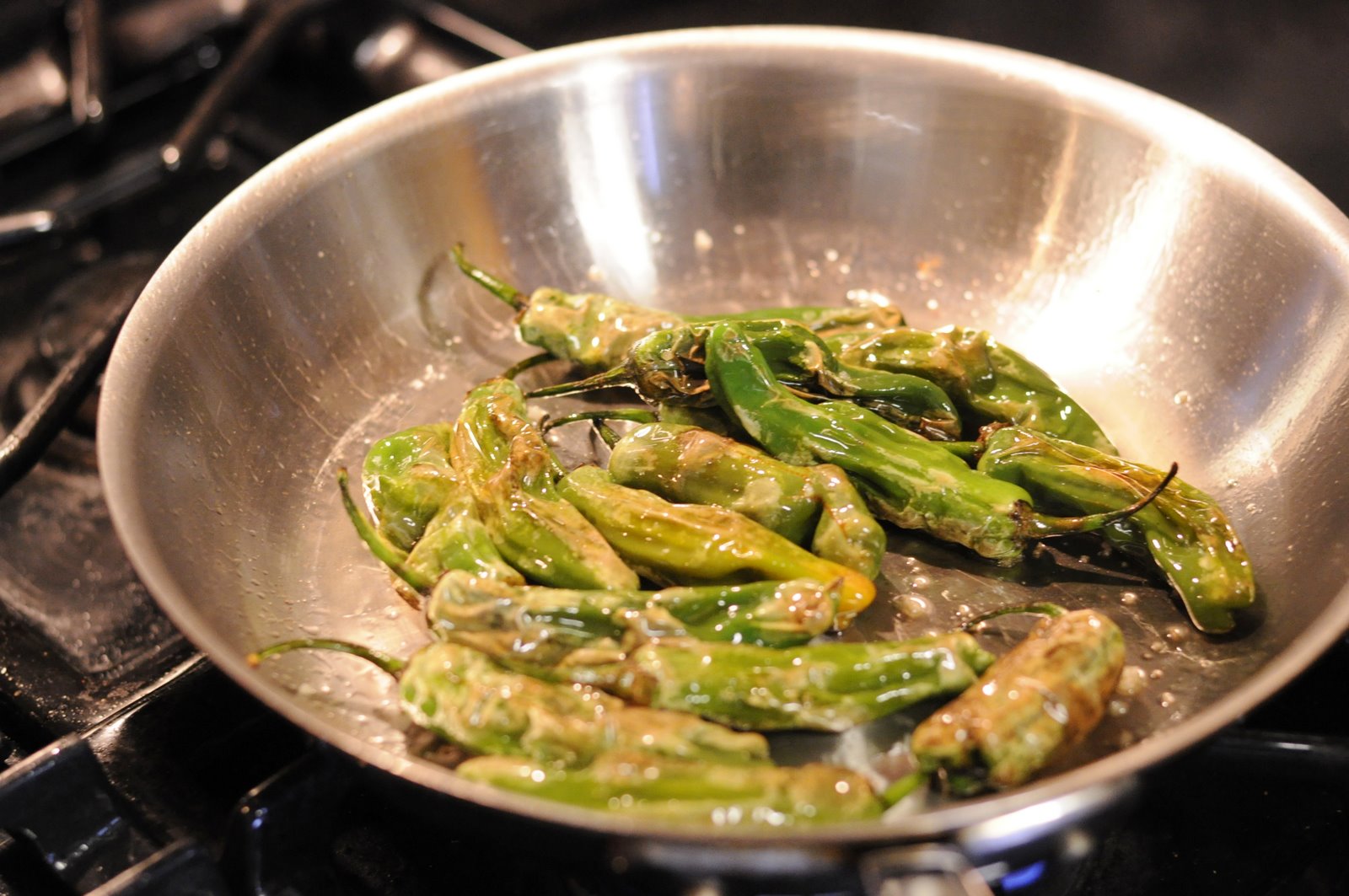
We fried them in a hot pan with some olive oil and tossed in some rock salt.
Voila! Simple, sweet, spicy, salty and full of surprises. This is great as an appetizer with wine and cocktails. Watch out for the hot ones! This one is definitely not for the faint of heart.

Chili With Batangas Tablea Chocolate

For Superbowl Sunday, our tradition is to invite a few friends over for some homemade chili made with unsweetened chocolate tablets from the Philippines.

My mother often sends us packs of Batangas Tablea de Cacao to use for hot chocolate (tsokolate eh) or chocolate rice porridge (champorado). We often have a surplus of tablets so we use them to make our chili dark and rich. The chocolate adds a deep extra layer to the strong flavors of chili powder and tomatoes, as in some Mexican molé sauces.

Other than the chocolate, this chili cannot be far from traditional, calling out for the bold flavors of chili, paprika and cumin, as well as the meaty taste of ground beef.

We begin by sautéing our usual suspects, garlic and onion.
The spices are our friends, and we use them like there’s no tomorrow.
Mix in the spices, creating a deep, rich color and aroma.
Add the ground beef and saute until brown.
Browned ground beef is separated and tender.
Whole peeled tomatoes are manually crushed.
Pour in the tomatoes.
Simmer the stew.
Grate the chocolate tablets into the stew. 
Add the red beans.
Stir well.
Add the black beans.
Stir well.
Simmer for 2-3 hours on low heat.
Serve with cilantro leaves, cheese, onions and yogurt (in place of sour cream).
For Superbowl Sunday, we made a side of coleslaw.
We also served a tray of cornbread.
The evening’s offerings. Go Giants!

Chili with Batangas Tablea Chocolate


1 whole red onion, chopped
1 head garlic, chopped
3 large cans whole canned tomatoes
2 cans red kidney beans,  washed
1 can black beans, washed
1 beef boullion
2 pounds ground beef
1/3 cup chili powder
2 tablespoons ground cumin
1 tablespoon paprika
2-3 tablets Batangas tablea, available in good Asian/Filipino markets

(if not available, substitute 3 tablespoons unsweetened cocoa powder. Do not use Spanish tablea with cinnamon!)
Chopped onions, cilantro leaves, and 0% plain Greek yogurt for topping.

In a large pot, saute garlic and onions. Brown the ground beef and add the spices. Crush the whole canned tomatoes with your hands and add to the mixture. Stir and add tomato paste, tablea or cocoa, and bouilllon. Let simmer covered on low heat for 2-3 hours, stirring occasionally. Adjust seasoning to taste.

Serve hot topped with cilantro, onions and Greek yogurt (in place of sour cream).

Ginger Flounder and Steamed Choy Sum

Want a healthy, delicious meal in under thirty minutes? This puts the entree and the side in one oven for a great meal 20 minutes later.

We first encountered this fish dish when a friend named Fanny made it for us, but using a whole snapper. We’ve always enjoyed the flounder at Hop Kee so we decided to order a whole flounder from Fresh Direct (can’t say any more good things about their fish and seafood section). I like this dish because of its simple yet distinct flavors and relatively simple preparation. Along with choy sum (chinese brocolli), it’s a perfect combination of light protein and greens.

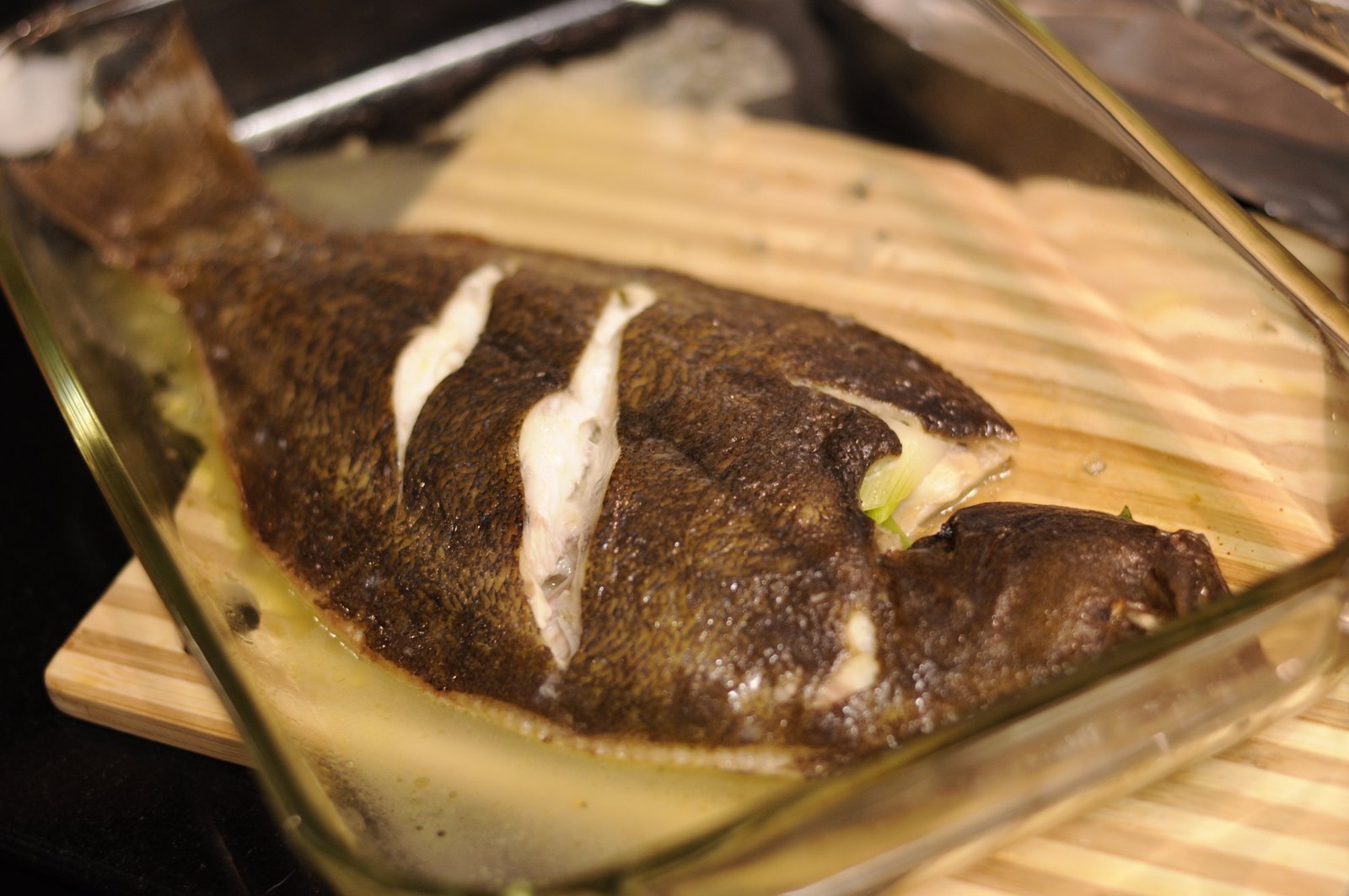
 Pre-heat the oven to 400C. Begin by cutting through the meat of the flounder twice with a knife. Don’t go all the way through! Salt the flounder on both sides and drizzling some olive oil on top. Cover with aluminum foil and bake for 20 minutes.
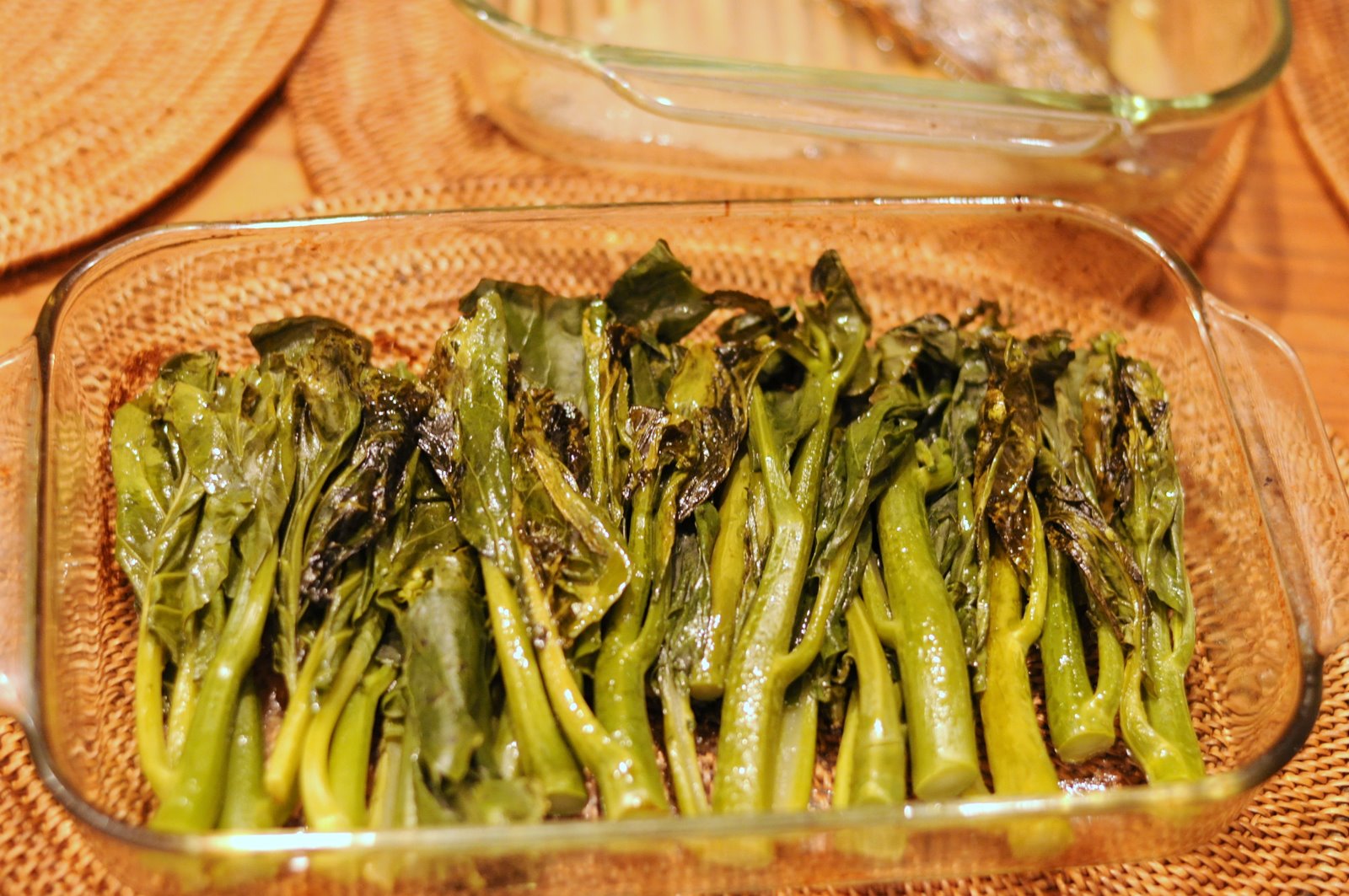
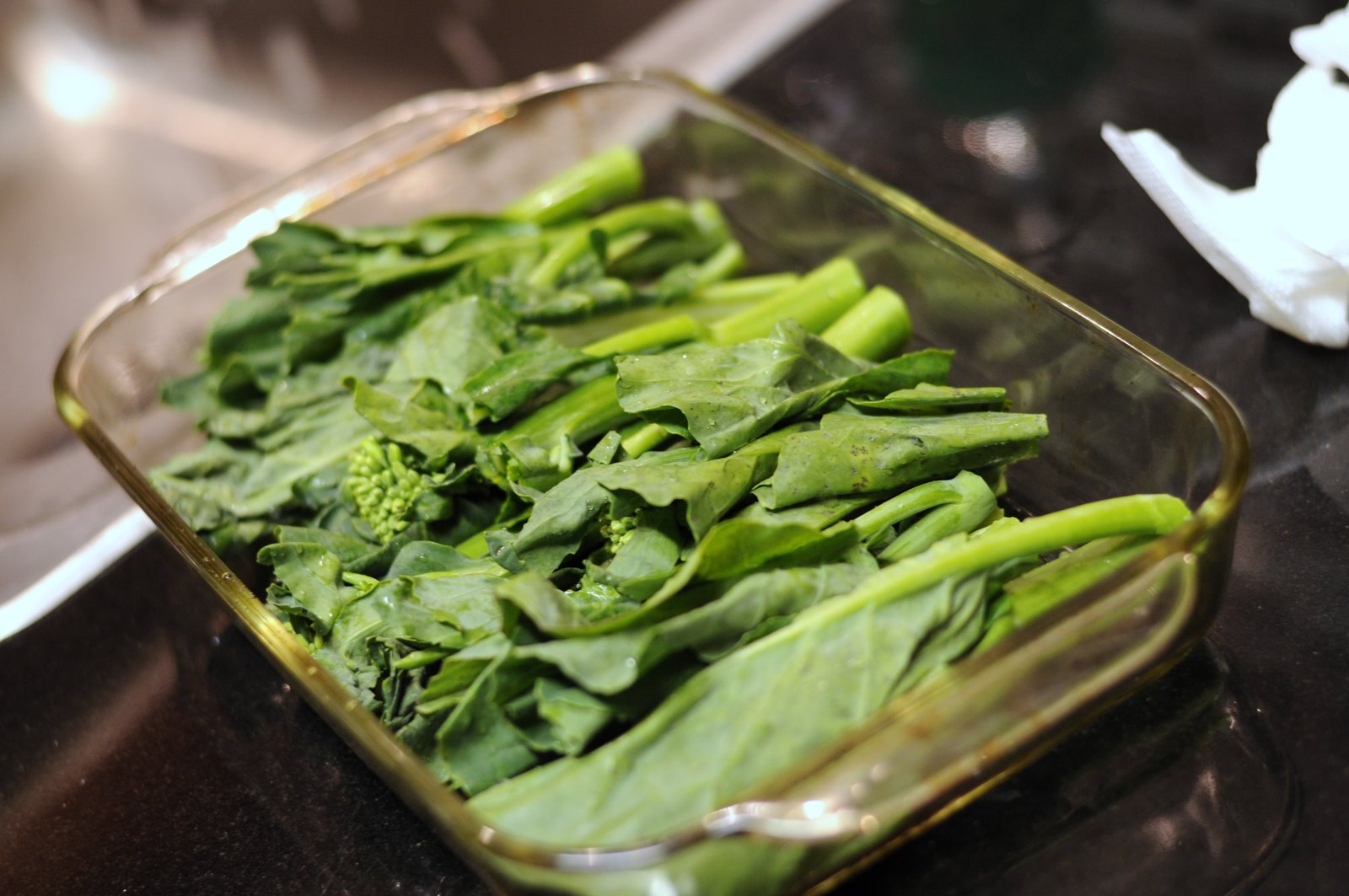
While the flounder is baking, cut and arrange choy sum (Chinese broccoli) in a baking dish
and drizzle with some olive oil.

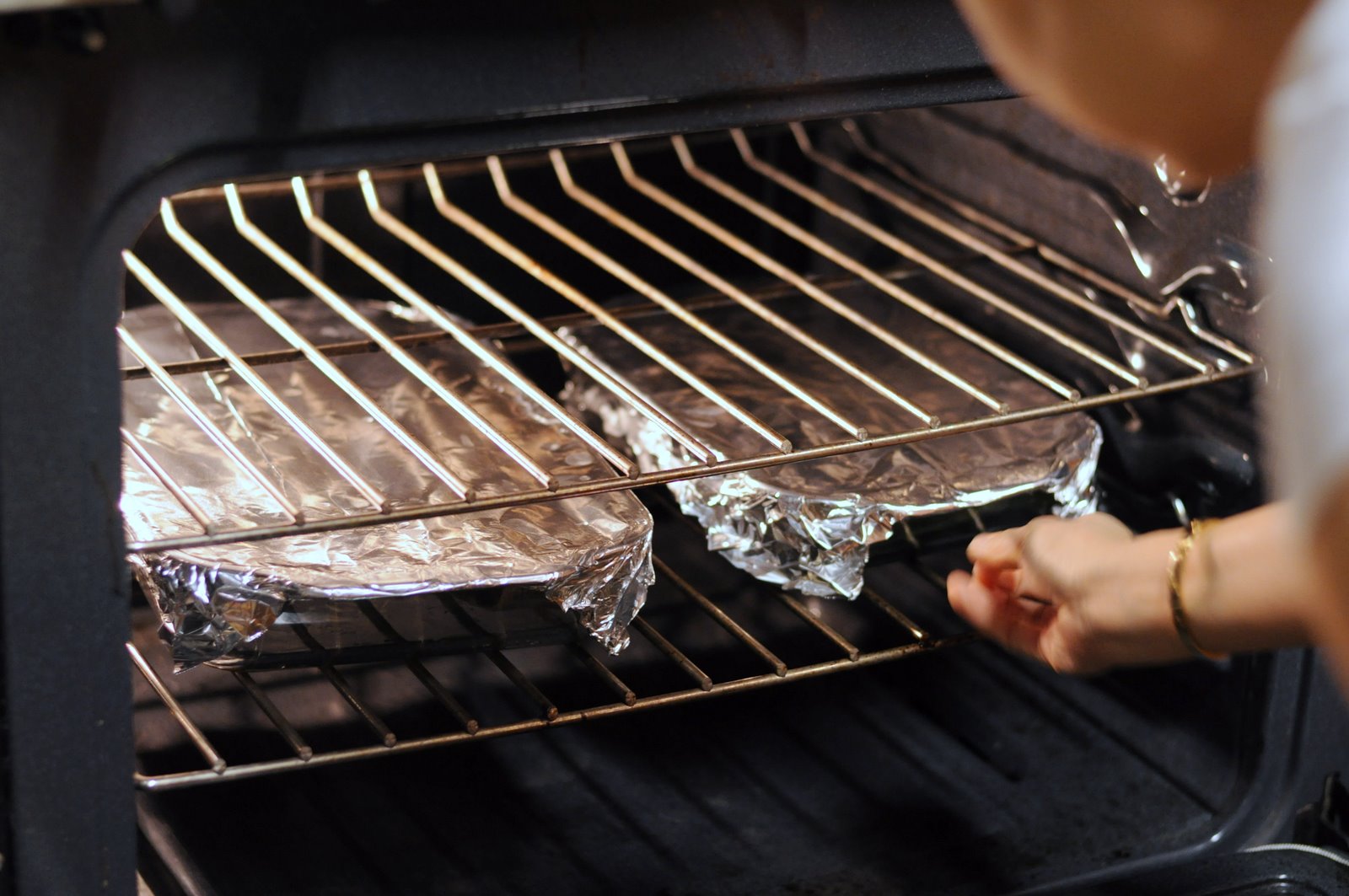
Cover securely with aluminum foil. This will create the steam that will cook your choy sum.

Put the choy sum alongside the flounder and retrieve both when the flounder is done.

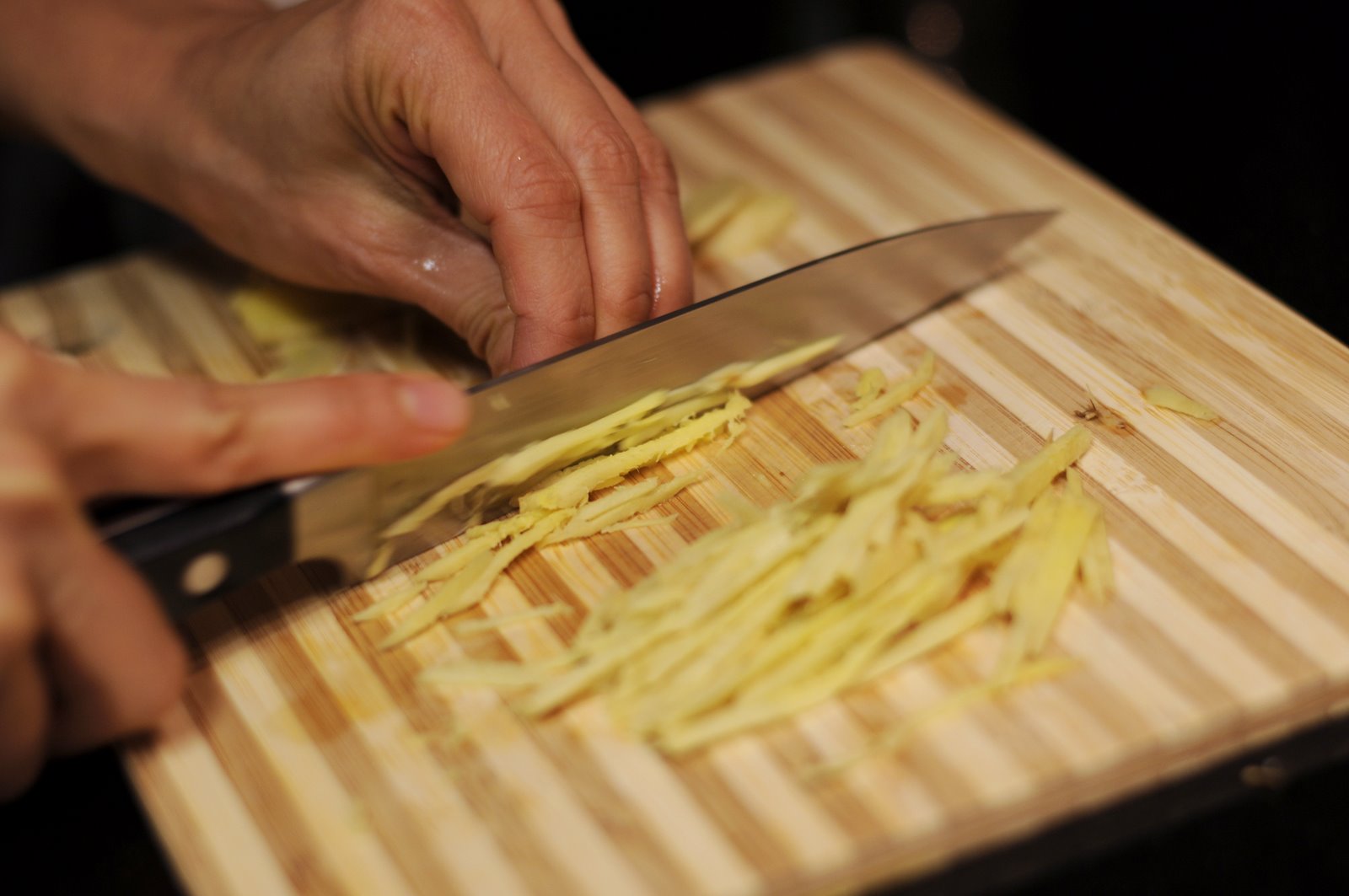
While both are baking, cut some ginger into very this strips.

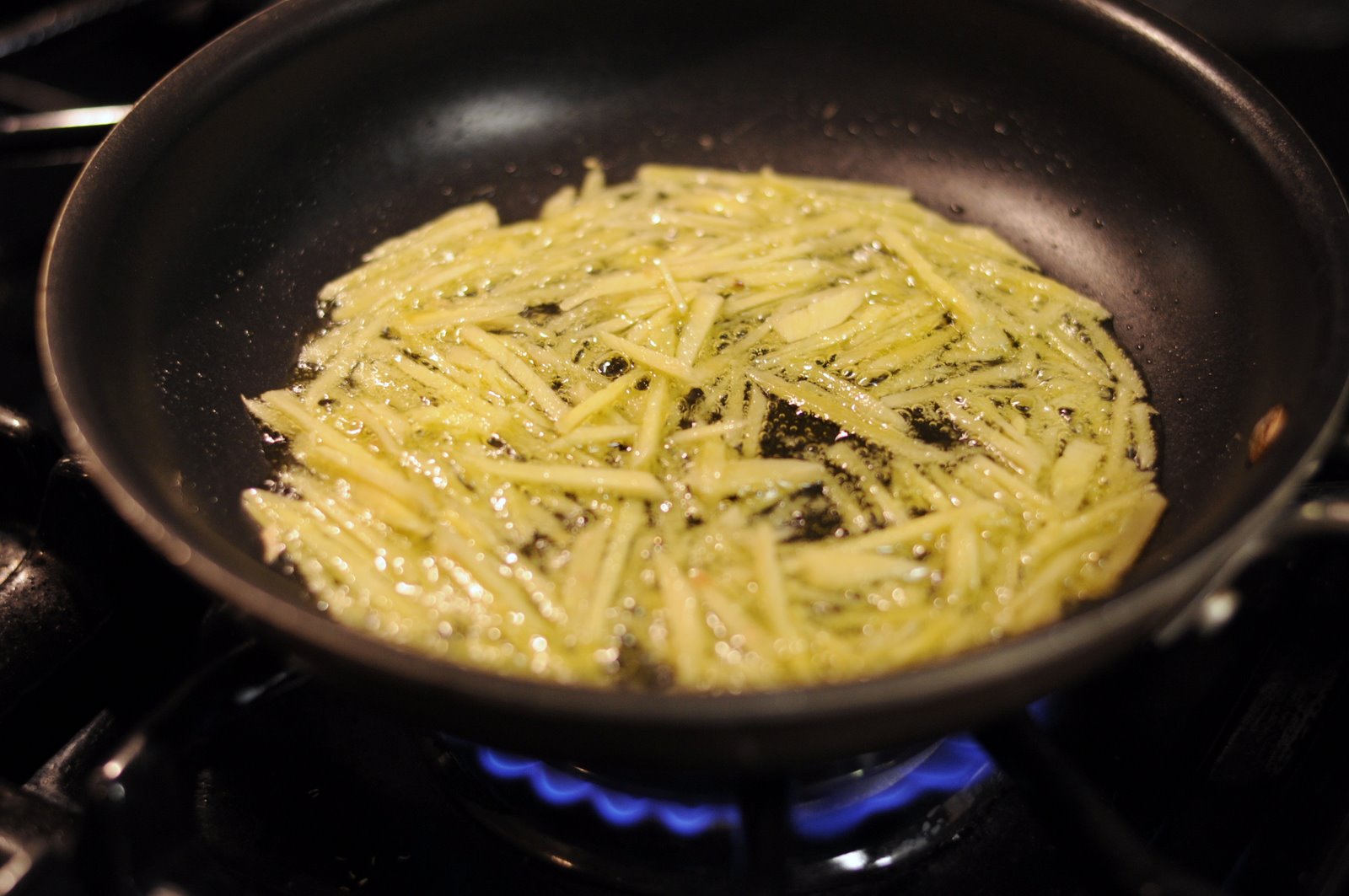
Saute ginger in olive oil and drizzle with a little soy sauce and sesame oil. 
Ginger should turn into a crisp brown.

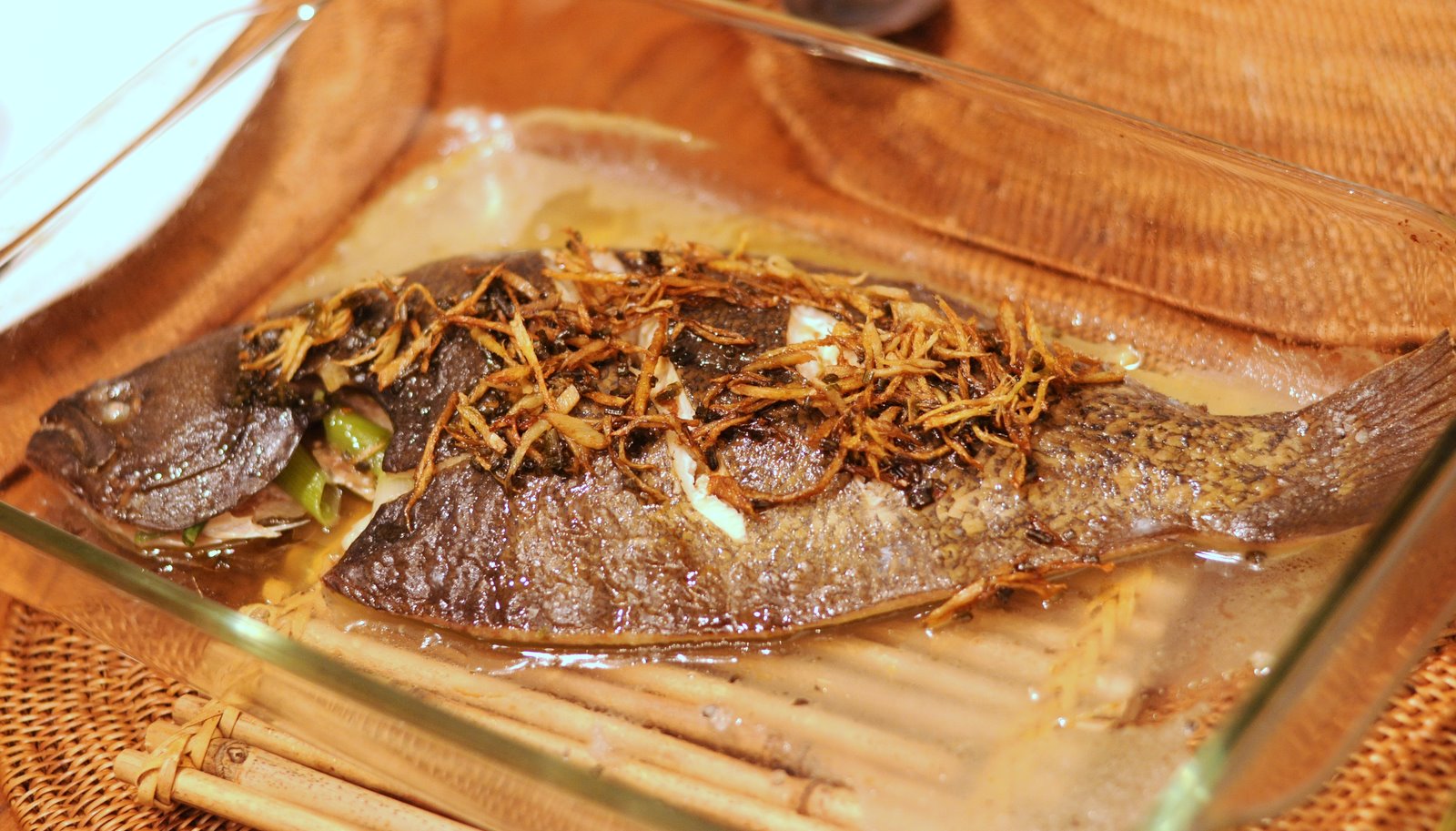
The flounder is done in 20 minutes or when the meat is opaque but still moist and slightly gelatinous.
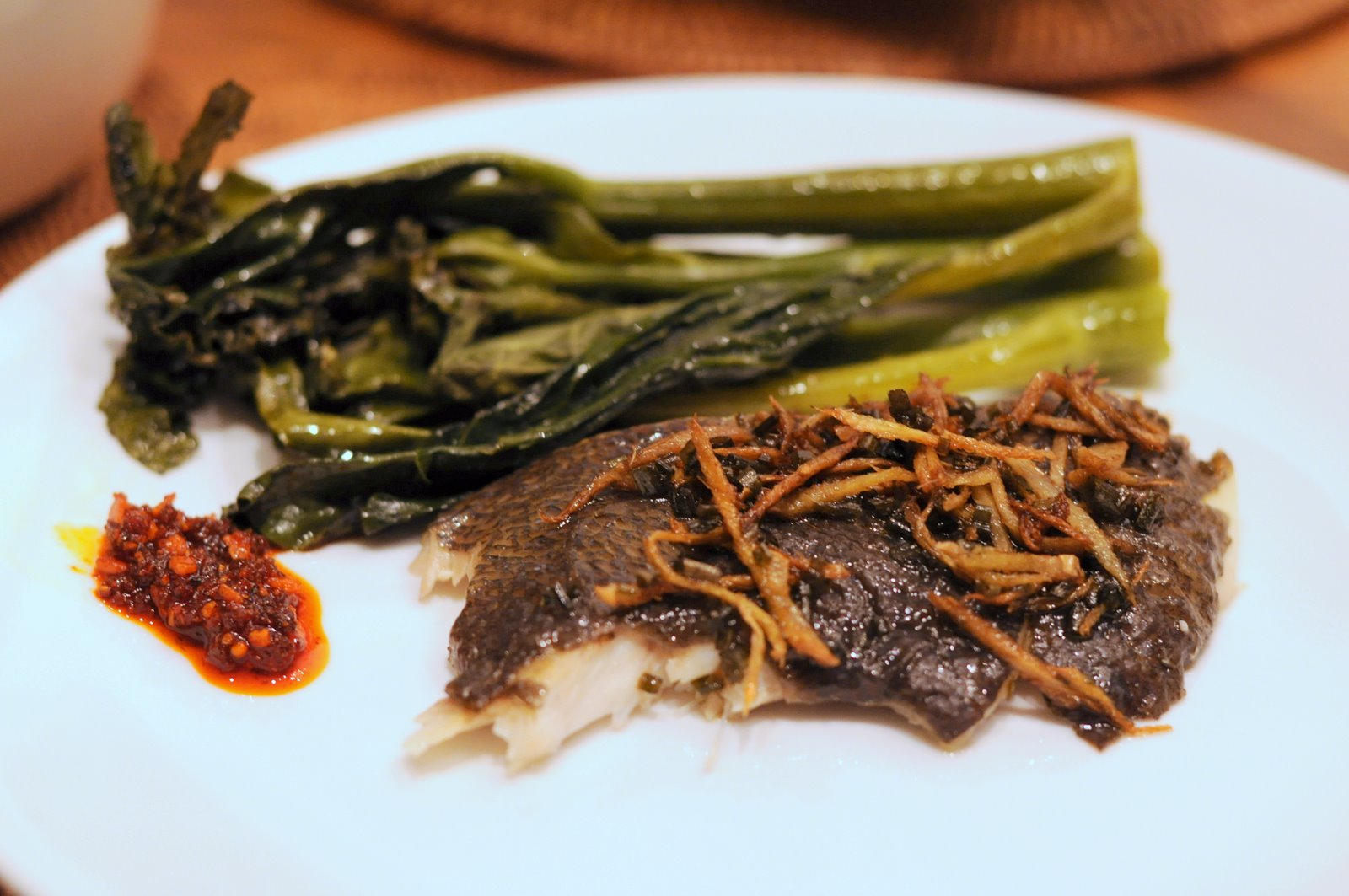
Pour the ginger mixture on top of the flounder.

 Take the choy sum out.
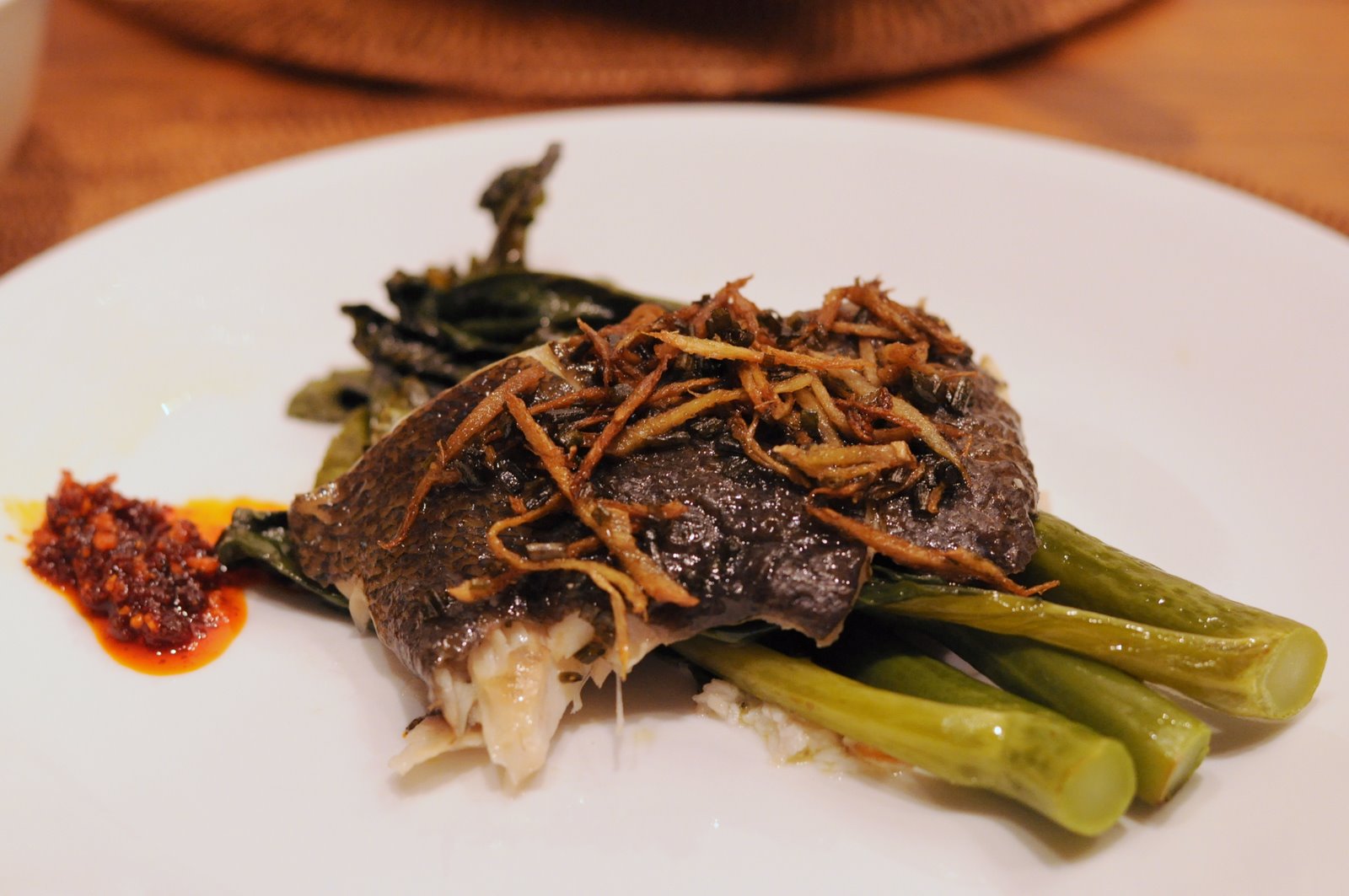
Voila! If you think this looks pretty, wait till you smell it.

Serve with the choy sum for a fragrant, sumptuous and healthy meal!

Served here with a dollop of  bukkake okazu rayu or chili garlic oil for the choy sum. One may substitute oyster sauce or soy sauce for dipping, or simply eat the choy sum on its own.
The flounder goes really well with the sweetness of the choy sum when it’s steamed in its own juice.
 I love chili garlic oil, especially this one that our friends graciously shared with us from Tokyo.
It’s different from the Chinese version (I favor Lee Kum Kee’s chili oil) in that it is much more flavorful and has bits of fried garlic that miraculously stay crispy in the oil. A must-have if it’s available to you. Left to my own devices, I could drink this bottle straight up!
Related Posts Plugin for WordPress, Blogger...