Category Archives: Recipes

Short Rib Adobo With Coconut Milk – When The Whiteys Cooked Filipino Food

I won’t make ramen for a Japanese friend, nor will I cook pasta for an Italian chef. As a food enthusiast I know my place and know enough to not to make something for someone if they already make the exact same dish perfectly.

Except that I said yes when our friend Jessica told me about the adobo recipe she found in the New York Times. I wrinkled my forehead when I heard “coconut milk,” imagining Thai food or some kind of strange milky variation. I tried not to flinch when I saw shoyu (Japanese fermented soy sauce) as an ingredient. I didn’t butt in and say you can only use Filipino soy sauce! The meat of choice was short rib. It was hard to go wrong.

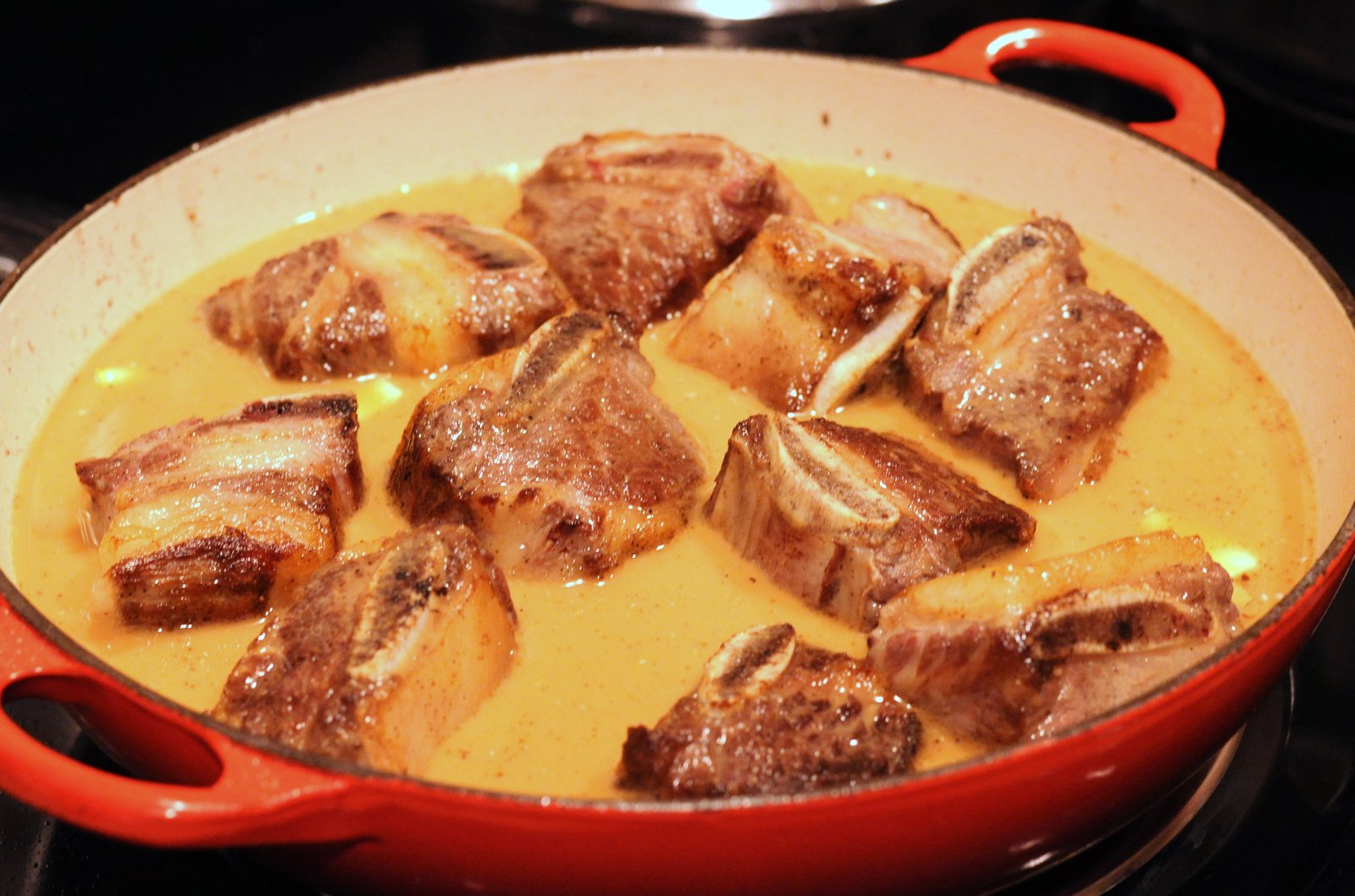
But I was wowed, no, floored with delight when the dish was done. The shoyu and chicken broth allowed for the saltiness while keeping the light color of the stew. The coconut milk added a subtle depth to the dish, the apple cider vinegar created a whole new dimension to the acid, and the searing and broiling process made the meat delectably golden and crispy. I was sufficiently and pleasantly impressed.

Served over rice with a side of steamed bokchoy. Yes, those are whole cloves of garlic.

We soaked our rice with the sauce and ate more than we should. This is how one honors a chef (myself included). In the morning we turned the leftover sauce and rice into Adobo Fried Rice. During both meals we shared great conversation and an even greater love for life.

These whiteys can make me my cuisine anytime.

More on adobo here. My Crispy Pork Belly Adobo recipe here.

Short ribs are browned on all sides.

The rest of the ingredients are added: shoyu, vinegar, coconut oil, broth, bay leaf, garlic.
The Dutch oven is covered and made to simmer in the oven for two hours.
The meat is removed from the pot and transferred to a pan to broil until brown and crispy.
It is returned to the sauce before serving.
Heavenly perfection.

(Incidentally, this recipe comes from Amy Besa and Romy Dorotan, owners of the Brooklyn joint Purple Yam.)

From The New York Times


Beef Short-Rib Adobo
Time: 2 1/2 hours
3 pounds short ribs
1/2 teaspoon kosher salt
Black pepper
3 tablespoons oil
1 cup chicken stock
1 cup coconut milk
1 cup cider vinegar
1/2 cup soy sauce
1 head garlic, cloves separated and peeled
3 bay leaves.
1. Heat the oven to 275 degrees. Season the ribs all over with salt and pepper. In a large Dutch oven over medium heat, pour in the oil. When it is warm but not smoking, add the ribs to the pan, in batches if necessary, and brown well on all sides, 4 to 6 minutes. Remove the ribs from the pan and pour out the oil.
2. Add the remaining ingredients and 1 teaspoon black pepper, stir well, and add the ribs back in one layer. Use two pans if necessary, distributing the liquid. Bring to a boil over high heat. Turn off heat, cover the pan and put it into the oven. Cook until the meat is tender and falling off the bone, about 1 1/2 to 2 hours. The liquid should only simmer very gently. Skim off excess fat when you check on it.
3. Transfer ribs to a broiling pan. Put the braising liquid over high heat; boil for 10 to 15 minutes to thicken it. Meanwhile, put the ribs under the broiler until brown. (You can dispose of the bones if they become loosened.) Put ribs on a platter; pour sauce on them.
Yield: 4 servings.
Note: You can double the recipe, and cook the ribs in two layers. Cooking time will be a bit uneven, though, so it’s best to try to turn over the ribs halfway through the cooking.

Filipino Cuisine 101: Lumpia, Munggo, Adobo, Talong, Ube

“What should we feed them?” I asked about our next door neighbors we invited over for dinner. It was our first time having them over, and if we’ve never fed someone before, we try to gauge the kind of people we are about to feed. Do they seem picky? Are they are adventurous enough to not wrinkle their nose at the mention of fish sauce? We had an idea but were uncertain. So as a precaution, I asked about any dietary restrictions. 
“None. Chef’s choice. Thanks for asking!” was the reply. That was music to our ears, so we decided on what it was going to be: Filipino Cuisine 101. 
What happened to the dinner? Our neighbors confessed that they’ve secretly enjoyed the cooking aromas coming from our door every night. They ate heartily, and those are the kinds of eaters I love to feed. Now we can move past 101 and maybe on over to 102 or another foreign cuisine. 
For now we’ll present the basics.  The captions link to each dish’s recipe. Enjoy!
Lumpiang Toge (Fried Bean Sprout Spring Roll)
Recipe and photos here.
 Ginisang Munggo (Mung Bean Soup)
Recipe and photos here.

Crispy Pork Belly Adobo.  
Recipe and photos here.
“Inihaw” Na Talong (Grilled Eggplant). 
Recipe and photos here.
Main Course: Adobo and Eggplant
Baked Ube (Purple Yam) and Vanilla Ice Cream.
Recipe and photos here.

Grilled Eggplant ("Inihaw" na Talong)

“I never know what to do with eggplant,” said my Food Coop squad mate. “What?” I said, baffled. “You can do everything with it!”

To me, an eggplant is as versatile as a potato, and I would guess it’s even more nutritious. As a young picky eater, eggplants were the only vegetable I would eat, and I liked them fried and dipped in soy sauce and lime. Because of their size, Asian eggplants are much easier to cook whole without slicing and having the pieces dry up during grilling. Grilling Asian eggplants on a stove top gives them a delicious burnt flavor and is my preferred way of cooking them, but in a pinch baked eggplants almost always suffice.

They are tasty enough on their own and are even better with condiments. Baked Asian eggplants wrapped in foil make a great side dish, and may also be peeled and chopped to make a nice salad.

How to Bake Asian Eggplants
Wash eggplants and wrap in foil.
Bake for 40 minutes at 375C, testing with a fork if done.
Here it is served with a sauce of shrimp paste, vinegar and onions.
A great side to a meat dish such as Crunchy Pork Belly Adobo.

Mung Bean Soup (Ginisang Munggo)

I grew up dipping the adobo in my spoon in munggo, a soupy stew made with green mung beans, sauteed tomatoes, onions, and horseradish leaves (malunggay). It just seemed to go side by side with the ubiquitous adobo and complimented the saltiness with the flavor of beans and tomatoes. In the US, malunggay can be found in the frozen section of good Filipino and Asian grocery stores, but we make do with a handful of frozen chopped spinach added towards the end of cooking.
The typical preparation of munggo is a little thicker than how we make it, but we prefer a more watery soup we can slurp alongside our meal or pour over our rice. The dominant flavors include onions, tomatoes and fish sauce.

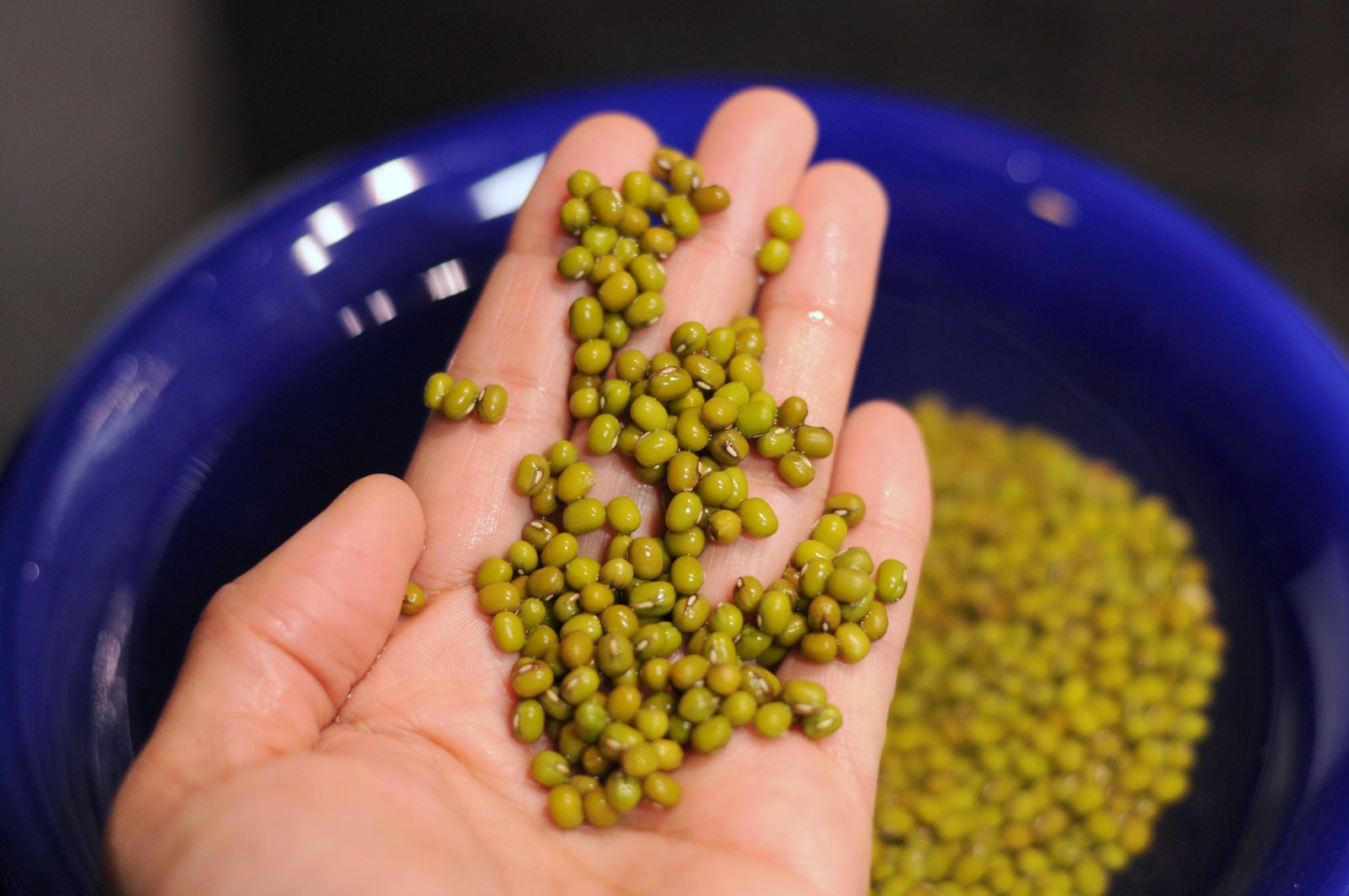
Soaking mung beans overnight in water lets it cook quicker and create a unique texture when done.
In a pot with water, boil the mung beans on medium heat until soft, about twenty minutes.
In a separate pan, saute onions, tomatoes, and fish sauce.
When tomatoes are soft, add to the pot with mung beans.
Add bouillon and simmer for another fifteen minutes. 
Add malunggay or chopped spinach before serving. Season with fish sauce to taste.
Serve alongside rice and adobo for your Filipino Cuisine 101.
Ginisang Munggo (Mung Bean Soup)

1/2 cup mung beans
1 ripe tomato, chopped coarsely
1/2 onion, choppped
1/2 small package, frozen chopped spinach
1/2 beef or vegetable bouillon
1 tablespoon fish sauce, more to taste
Soak beans overnight. Simmer until soft for about twenty minutes. In a separate pan, saute onion and tomatoes until soft and add to the pot. Add bouillon and simmer for another fifteen minutes. Add malunggay or chopped spinach before serving. Season with fish sauce to taste.

How To Wrap Lumpia (Bean Sprout Spring Roll)

Lumpiang Toge (Bean Sprout Spring Roll) is one of the comfort foods I grew up with. Street vendors served them out of baskets of fried food along with a bottle of spiced vinegar you can use to douse the lumpia to your heart’s content.


We’re not fans of deep-frying mostly because of the mess it makes, but for health reasons as well. We make an exception for lumpia, but mostly just when we serve it to guests who are always pleased by the crunch of the wrapper, the bite of the vinegar sauce, and the texture of the vegetables inside. 

Filipino restaurants fry their lumpia perfectly with a deep-fryer, but I find the filling starchy, having more potatoes than I would like. This recipe has no potatoes, just fresh bean sprouts, carrots and snap peas, sauteed quickly, drained and cooled then wrapped before frying in hot oil.
Sauteed vegetables being drained using a strainer.
How To Wrap Spring Rolls
Place about two tablespoons of filling on the wrapper.
Fold one corner in the direction of the other, forming a triangle.
Fold the left and right corners inward, covering the filling.
Roll forward.
Roll to the end, sealing the edge by dabbing with cold water, if necessary. 
Here they are ready to fry. It’s best to wrap them right before frying because when the wrapper gets soaked with liquid, it’s more likely to break.
Fry in hot oil.
Cook until brown.
Let the oil drain, setting on paper towels if necessary.
My favorite dipping sauce is this spiced vinegar.
Lumpia served with a mix of spiced vinegar, soy sauce, and crushed garlic.
Lumpiang Toge (Bean Sprout Spring Roll)
1 pound fresh bean sprouts, about 6 cups
1/2 white onion, chopped
1/2 pound snap peas, julienned
1 large carrot, julienned or coarsely shredded
1 teaspoon fish sauce
1 package spring roll wrapper
Defrost the spring roll wrapper thirty minutes before wrapping the spring rolls. Saute onions until soft. Mix in bean sprouts, carrots, and snap peas and stir fry until partially cooked, about 5-10 minutes. Season with fish sauce and drain before frying.  Filling can be prepared earlier and drained overnight to ensure a dry filing that won’t break the wrapper. Wrap each roll using two tablespoons of filling. Fry for 3-5 minutes until brown, drain and set on paper towels. Serve immediately with sauce.
Sauce:
1 clove garlic, crushed
3 tablespoons vinegar, spiced or apple cider
1 tablespoons soy sauce
Related Posts Plugin for WordPress, Blogger...