Category Archives: homemade

Ginger and Basil Oxtail

There are two beef cuts where one cannot go wrong cooking, so as long as there is time to spare. Oxtail, like short ribs (here and here), are flavorful pieces of bone-in meat that only need to be slow cooked with minimal seasoning to produce a tender and tasty dish that but packs a flavor punch.
The bones add a rich and marrow-like flavor to the stew whose sauce is good enough to mop bread or rice with. It’s common to find oxtails used in peanut stews like kare-kare, or in Spanish dishes as stews and sauces for mofongos and the like.
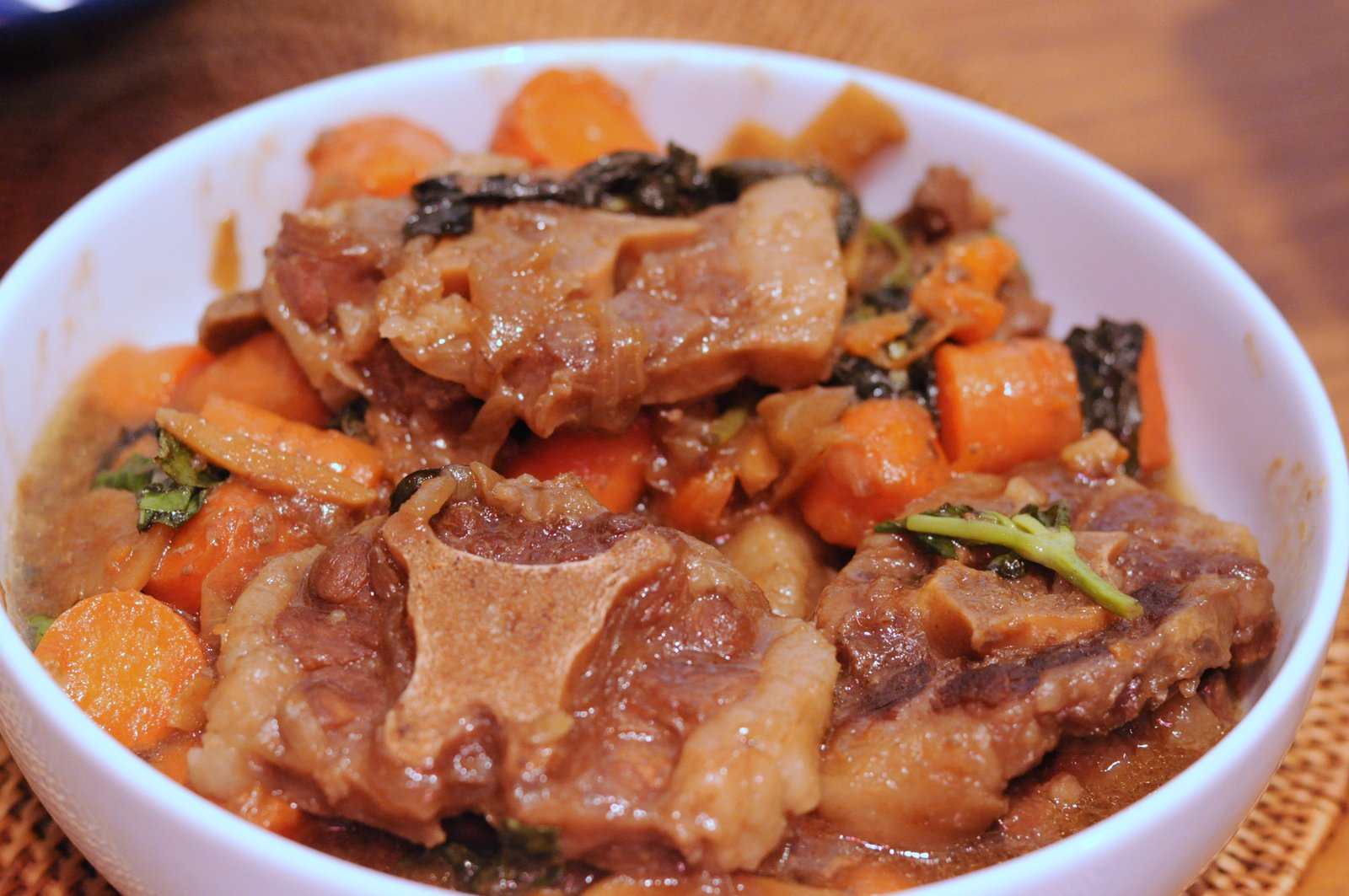
Ginger and basil oxtail is one of those dishes with limited ingredients, but with an amazing and layered taste.
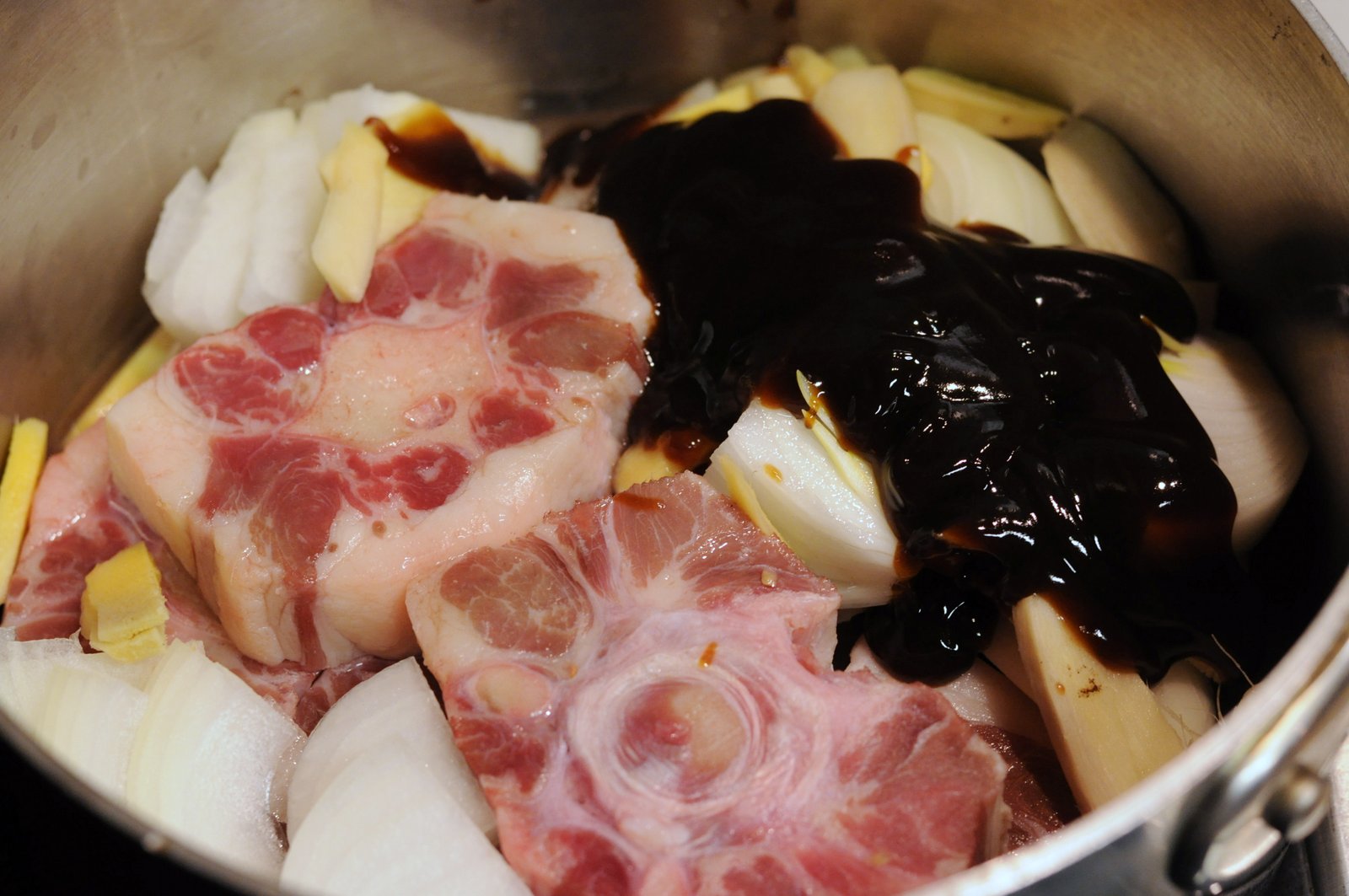
Oxtail, ginger, onion and oyster sauce are simmered in a pot.
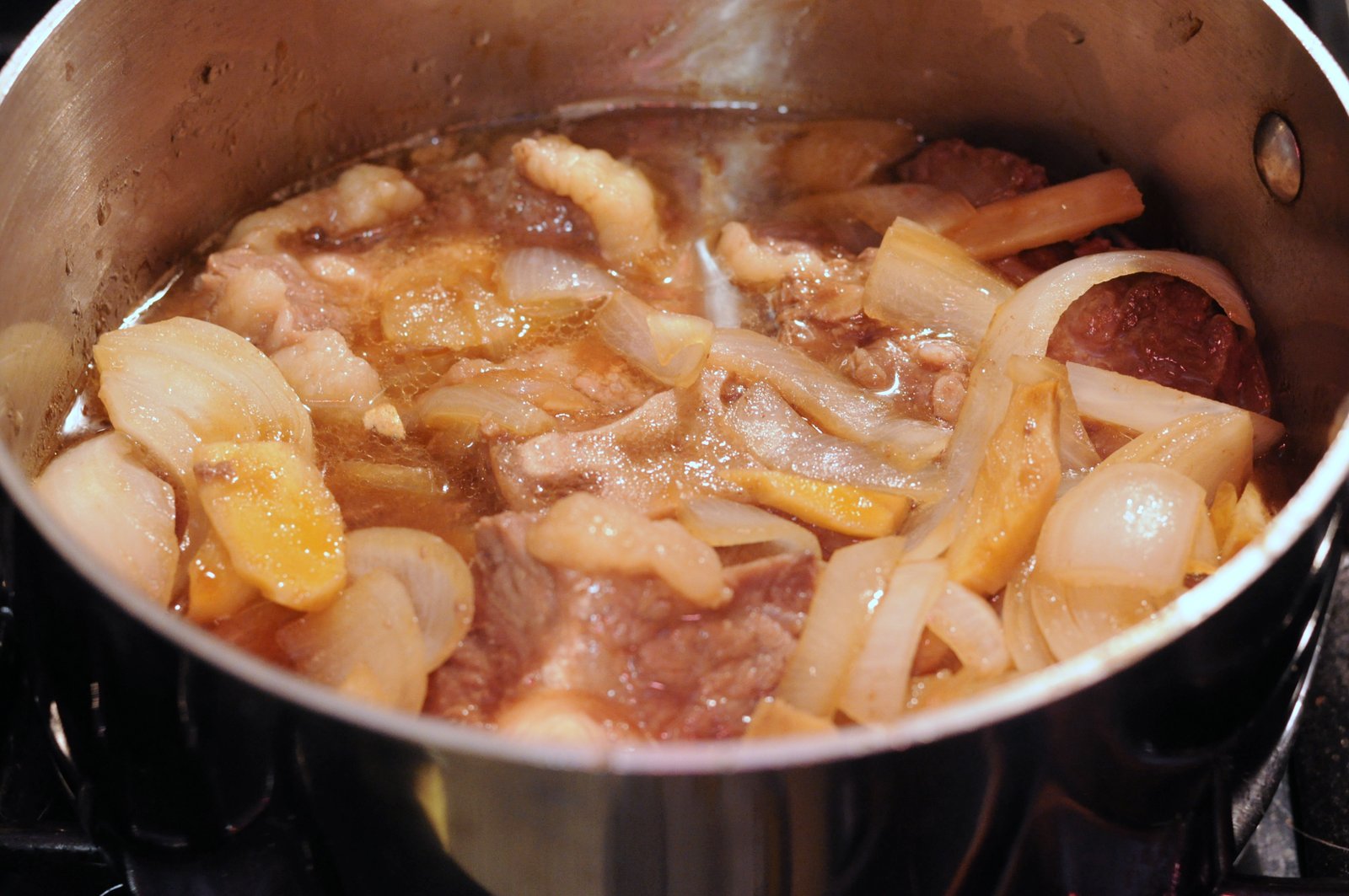
Thirty minutes.
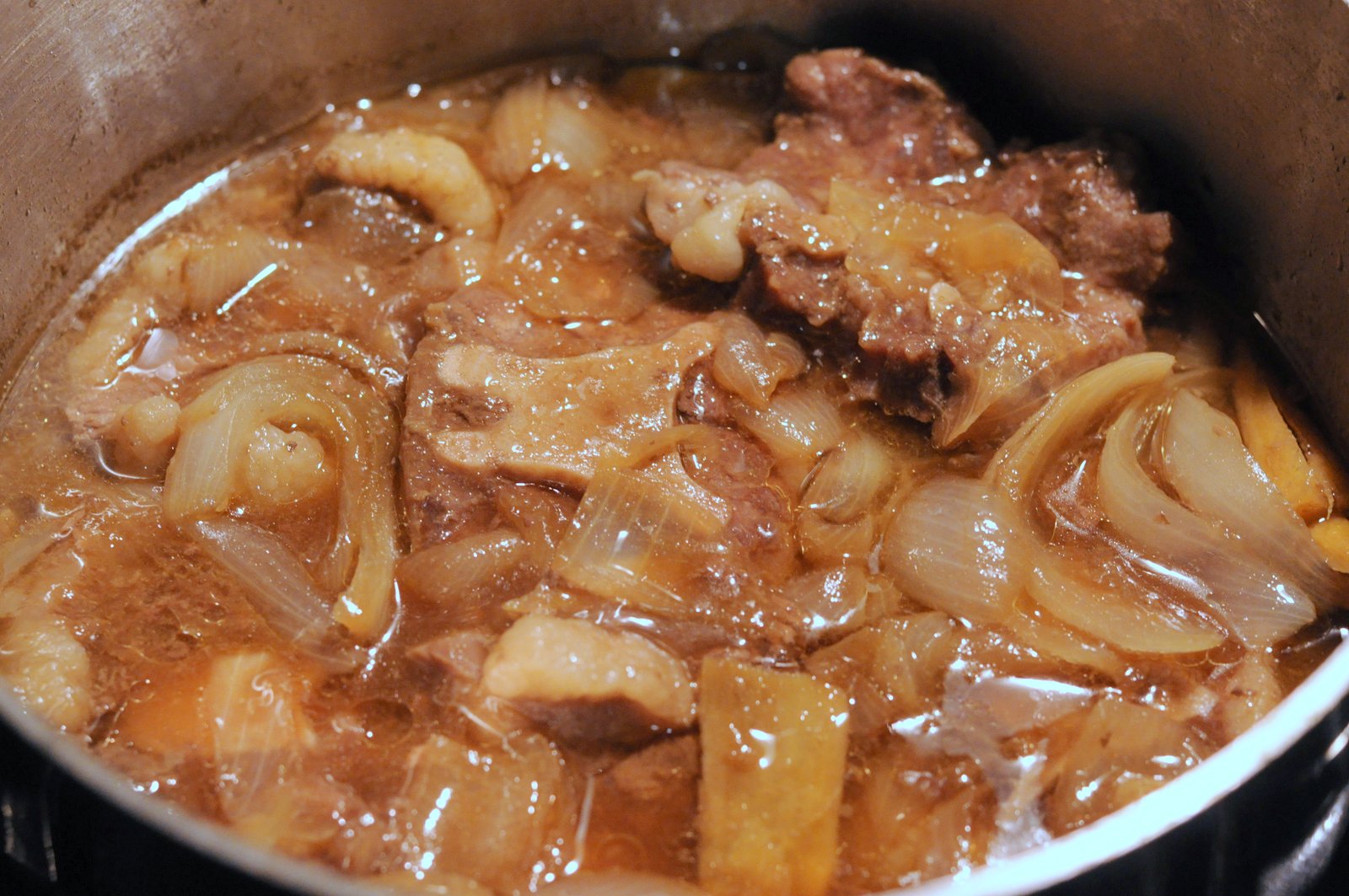
One hour.
Two hours.
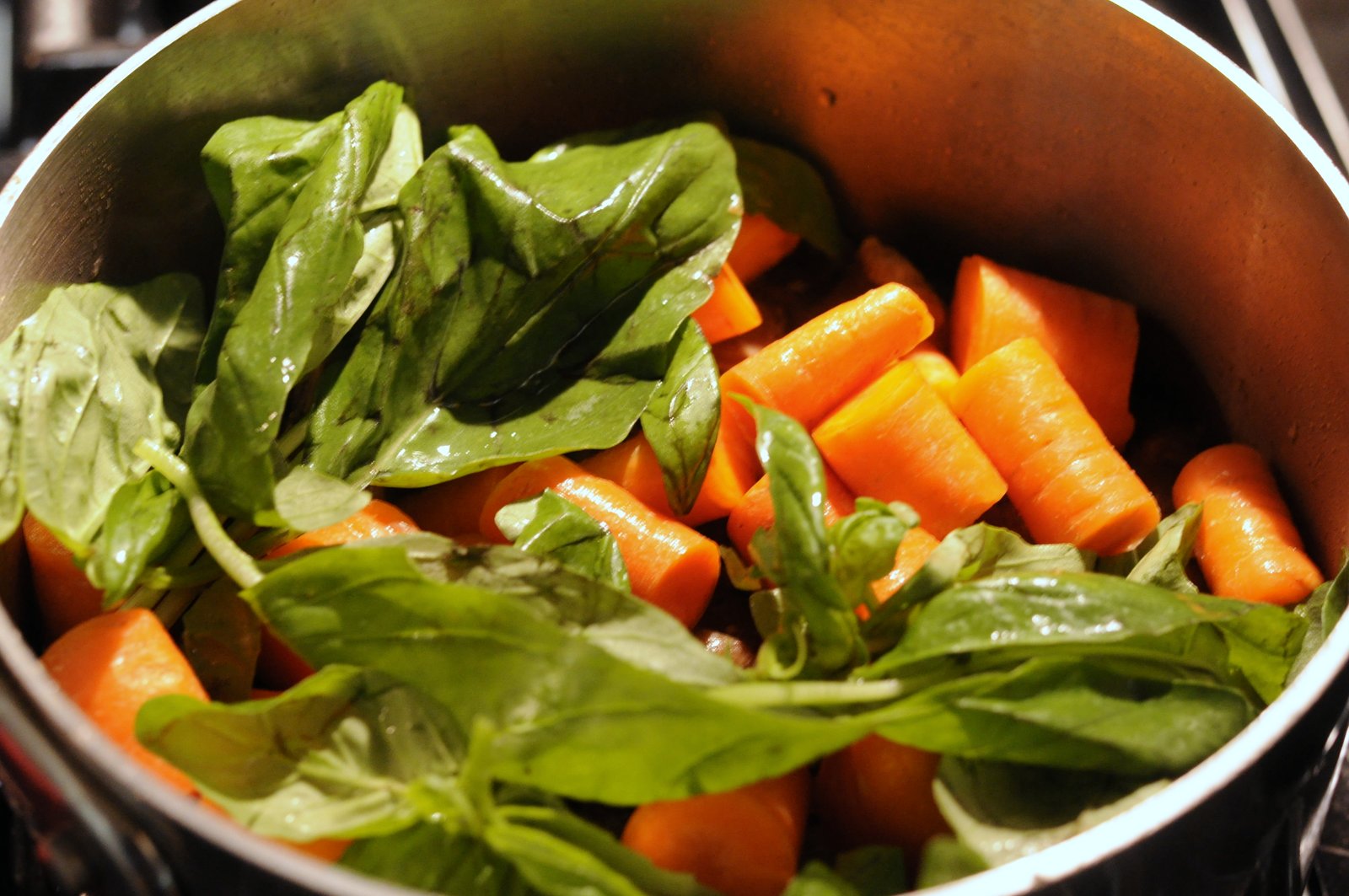
Carrots and basil are added.
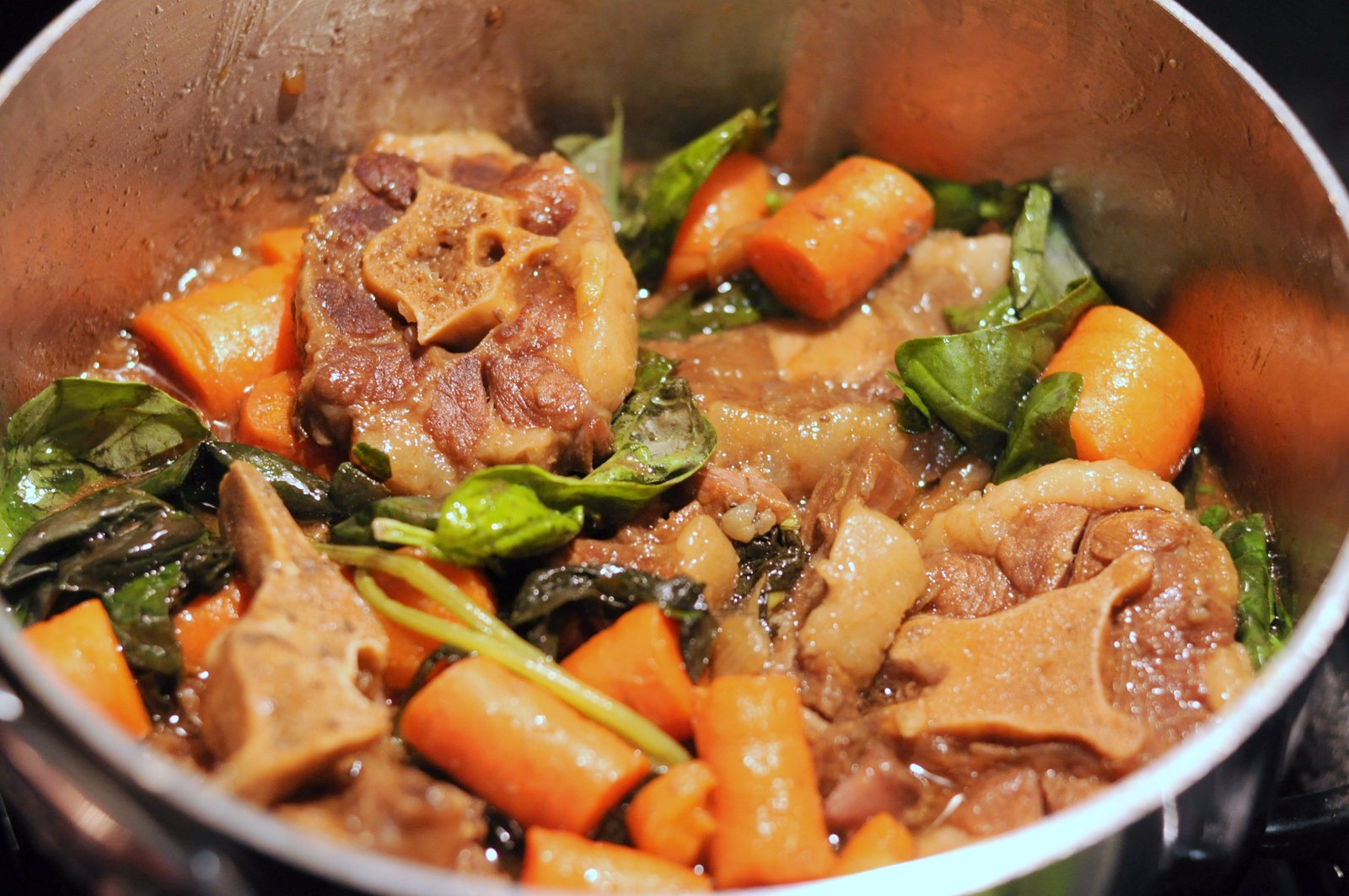
Simmer some more until carrots are cooked.
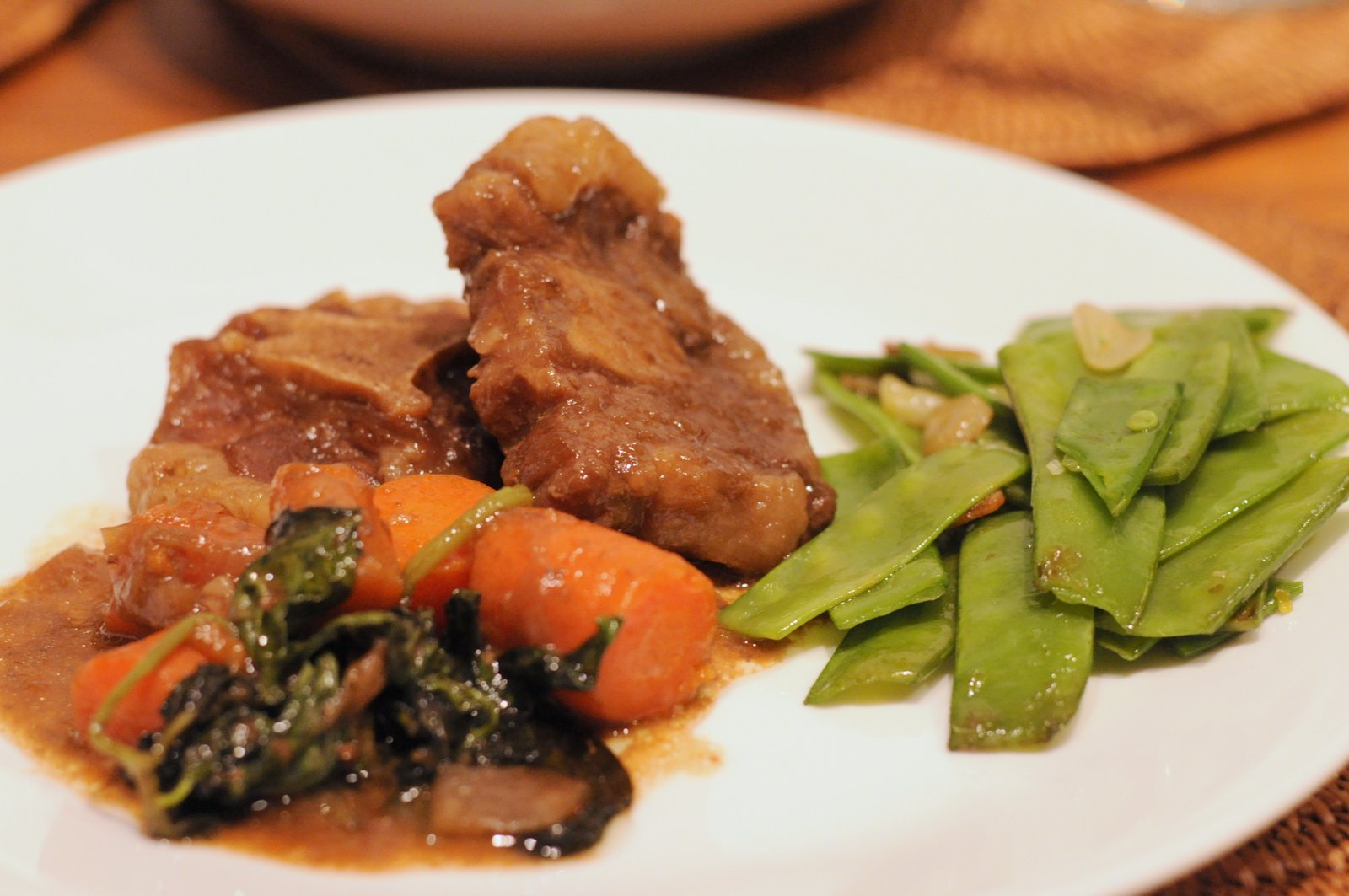
Served with snap peas.

Ginger and Basil Oxtail

Ingredients:

5-6 pieces 1-inch thick oxtail
1 whole onion, cut in quarters
2-inch piece of ginger, sliced
1/4 cup oyster sauce
1 cup water
2 medium carrots, sliced into 1-inch rounds
1/2 bunch basil leaves, washed

In a pot, simmer first five ingredients covered over low heat until meat is tender, about two and a half hours. Stir occasionally, adding carrots in the last thirty minutes and the basil fifteen minutes before serving.

Serve with vegetables and rice. Serves 3-4.
Ginisang Itlog (Sautéed Eggs)

We spent four days in Vermont cooking and eating with our dear friends who asked the same question (Mmmm…What’s in this?) and got the same answer (Fish sauce!) every time something was served to them.
It took a few days to convince them that fish sauce definitely is a major player in Filipino cuisine. Often used as a salt substitute, fish sauce adds a new dimension to the salty flavor, which by the time the dish is cooked is hardly detectable as an actual fish-based essence.
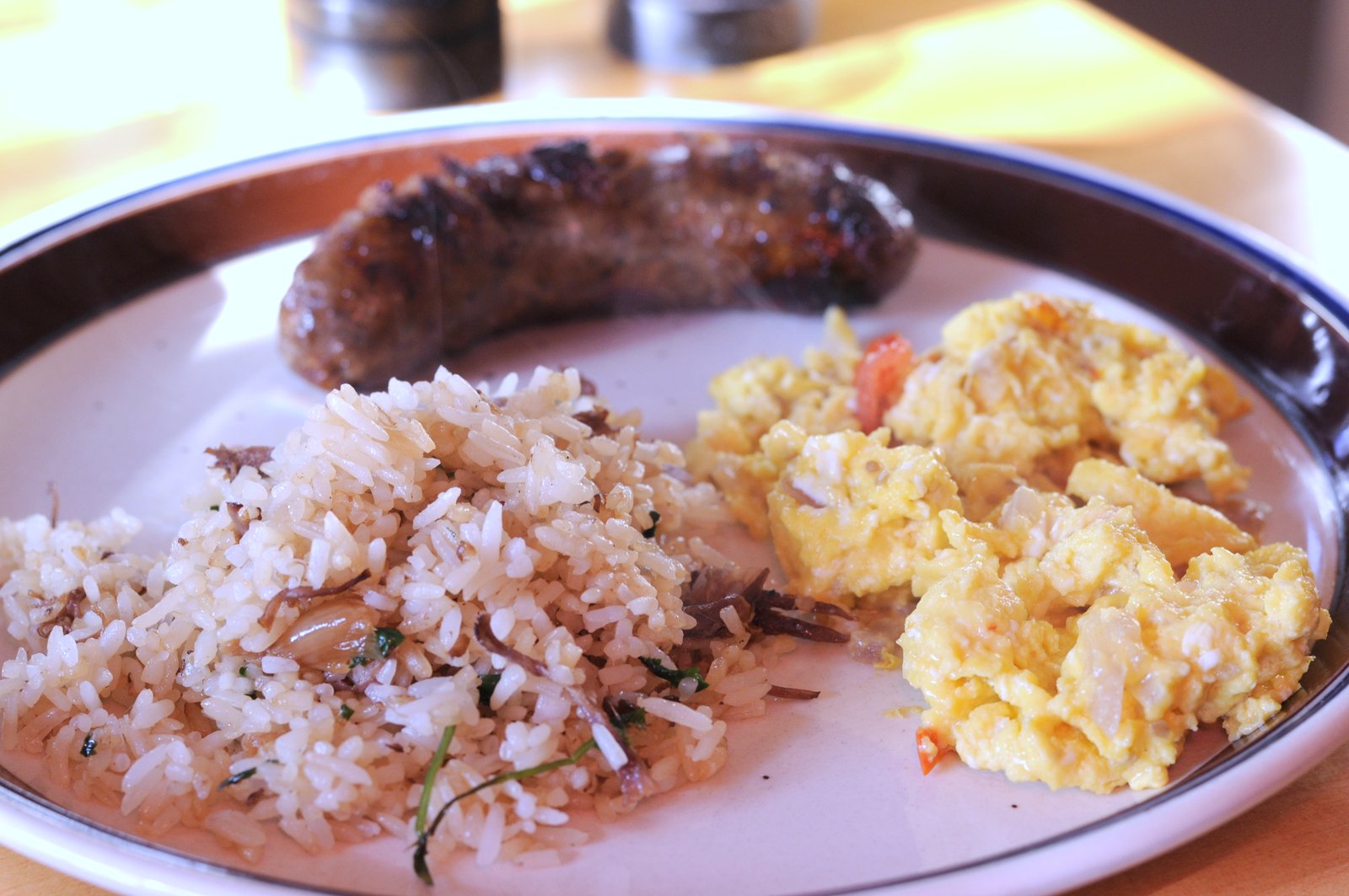
Ginisang itlong served with adobo fried rice and sausage.

Case in point would be the typical breakfast side of sautéed eggs. Ginisang itlog would simply be considered an omelet if not for the fish sauce, which is added during the process of sautéing the onions and tomatoes. By the way, the smell of onions, tomatoes and fish sauce is unmistakably Filipino. All I need to do is close my eyes and I am back in my nanny’s kitchen. I am ten years old, waiting for the day I would be handed the ladle.

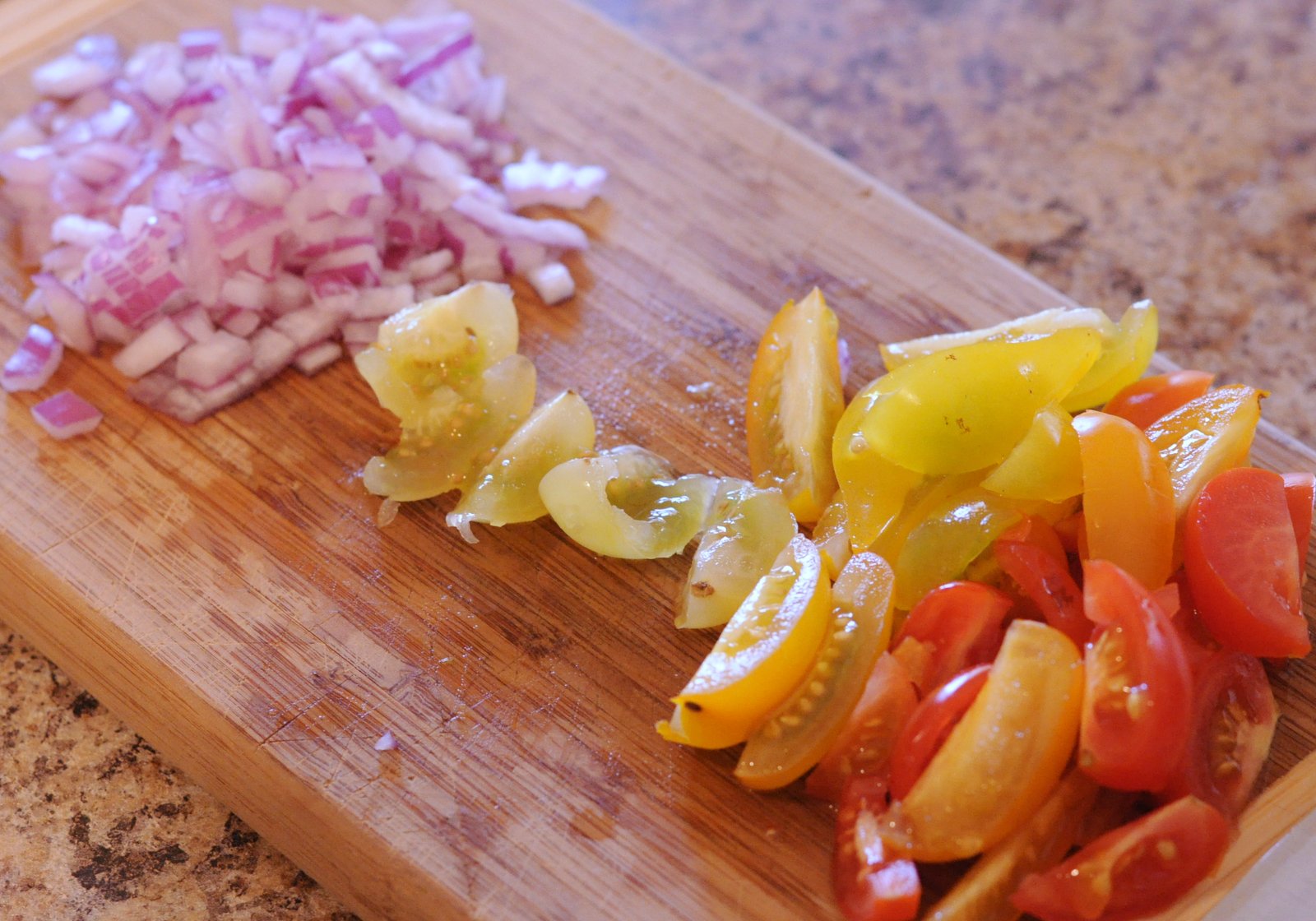
We begin by chopping up some tomatoes and onions. Ripe, unrefrigerated tomatoes work best.

They are sauteed in oil and 1/2 teaspoon of Thai fish sauce
(less if using Filipino fish sauce) for every four eggs until soft.
The consistency of the tomatoes and onions is key here.
They must be mushy and liquefied before the eggs are added.

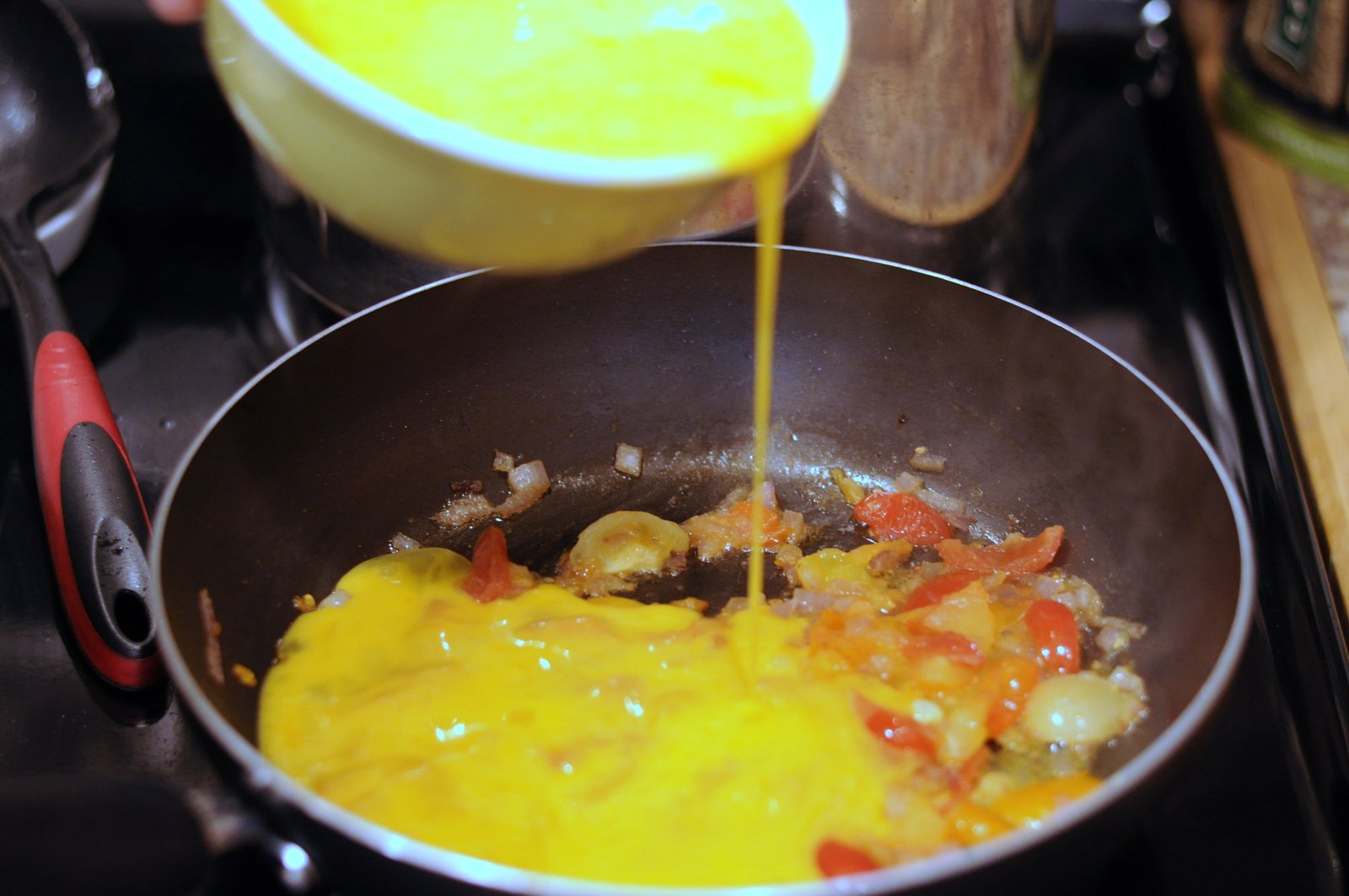
Beaten eggs are added and stirred into the mixture on medium heat.
Remove from heat while eggs are still runny. It will continue cooking as it rests.
Serve promptly with your Filipino farmer’s breakfast!

Lechon Paksiw: Another Celebration of Excess

It was the day of the Christmas party in the mid-1980s. I woke up to the sound of screaming pigs that morning and later learned that two whole pigs were slaughtered for the evening’s feast. The crime happened in the backyard and went on the entire day, a pit of red coals roasting two pigs turning on bamboo spits until they reached a red and golden color.

Later on it was decided that buying a whole roasted pig (lechon, in Tagalog) was far more convenient and economical than hiring a manglilitson (lechon maker). Either way the morning resulted in a surplus of meat and skin to be made into a stew called Lechon Paksiw.

“Paksiw” in itself is a term denoting a stew with vinegar. Used also for fish, it is designed to prolong the shelf life of food because the acid in the dish prevented bacteria from growing. Just like in adobo, which my family packed on many a beach trip because it kept well.

I was able to scam a roasted pig‘s head and some meat pieces from a recent Sopressata Making Class and we decided to make another favorite stew. To me the taste of lechon paksiw reminds only of mornings-after where a stew would be eaten for many days to come, reliving the original roast and the happy occasion. (Incidentally, we’ve made paksiw with leftover crispy pata or lechon kawali pieces.)

Roast pig pieces are placed in a pot along with bay leaves, peppercorns, garlic, vinegar and sugar.

This mixture is slow cooked for about three hours until falling-apart tender, adding more liquid if necessary.

Lechon sauce (provided when one orders it from a Filipino source) is added. Otherwise Mang Tomas Sauce is a great alternative.
The stew is cooked until it reaches a thick and rich consistency.

Served with rice and greens.

Rosario’s Lechon Paksiw


3-4 pounds leftover meat pieces and skin from a roasted pig, crispy pata, or lechon kawali
1 cup white vinegar
1 cup sugar
1/2 cup water
1 head garlic
5 bay leaves
10 peppercorns
1 bottle Mang Tomas or other lechon sauce

In a pot combine meat and all other ingredients except lechon sauce. Stew covered on low heat for about two hours, stirring occasionally. If sauce dries up, add vinegar and water in a 1:1 ratio. When meat is tender and skin is soft and curled, add the lechon sauce diluted with 1 cup of water and simmer for another 20 minutes. Adjust seasoning with salt or sugar.

Serve with rice and vegetables.

In Vermont, We Ate

President’s Weekend marks the annual ski trip we take with friends, the word “ski” used loosely as this is really more a showcase of food and drink.This year’s group was not that big, just two couples and a baby, so we were able to have the luxury of cooking in small batches as opposed to the usual stock pot designed to serve ten or more.

Shakshuka AKA Delicious – Eggs poached in tomato, chickpeas, feta.

Aside from good Vermont snow we shared a lot of genuine conversation not usually afforded by bigger groups. Oh, and the food!

Here is the spread (more photos and recipes when you click the caption links):

Baked Bronzino (click for recipe)

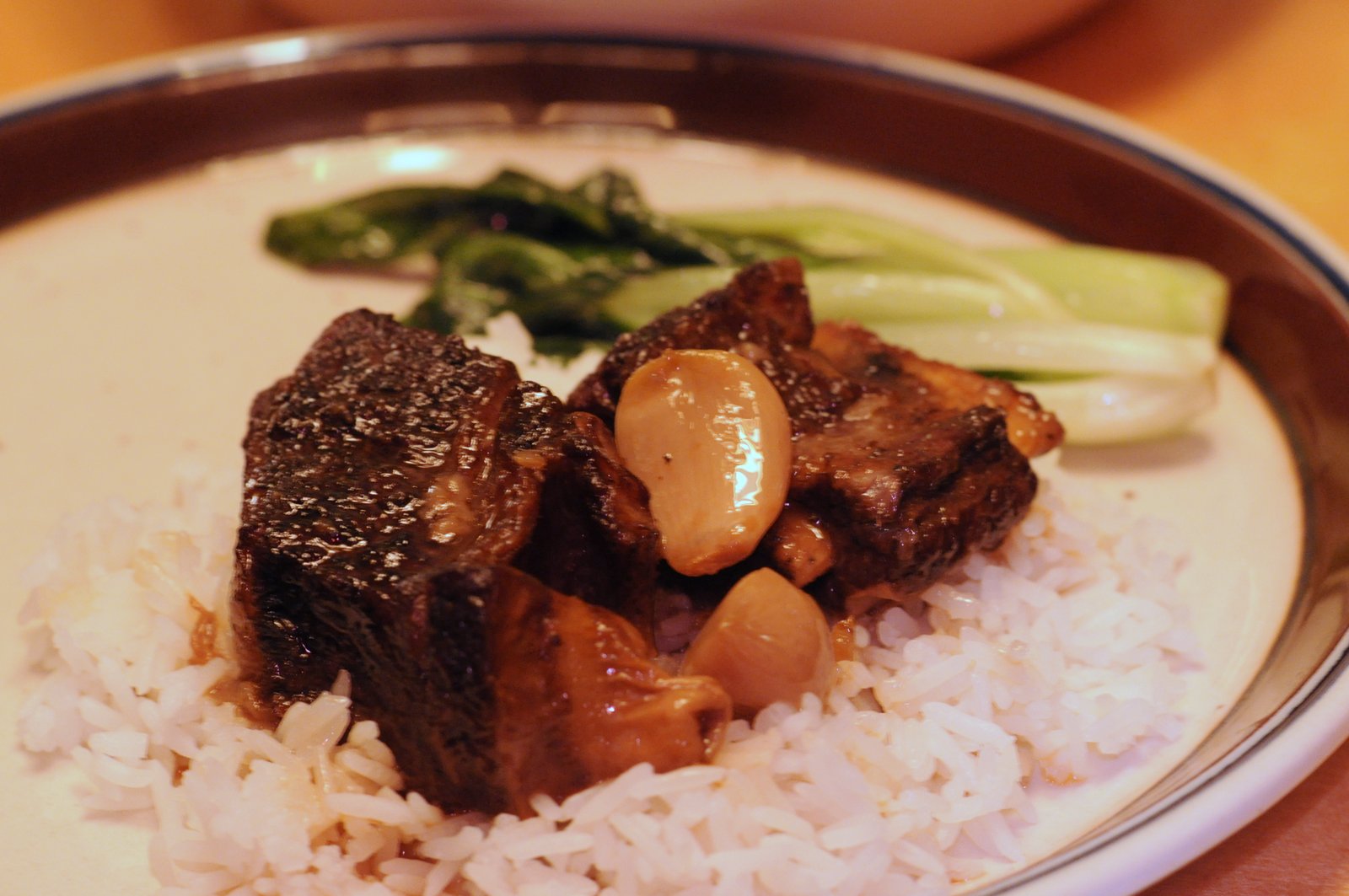
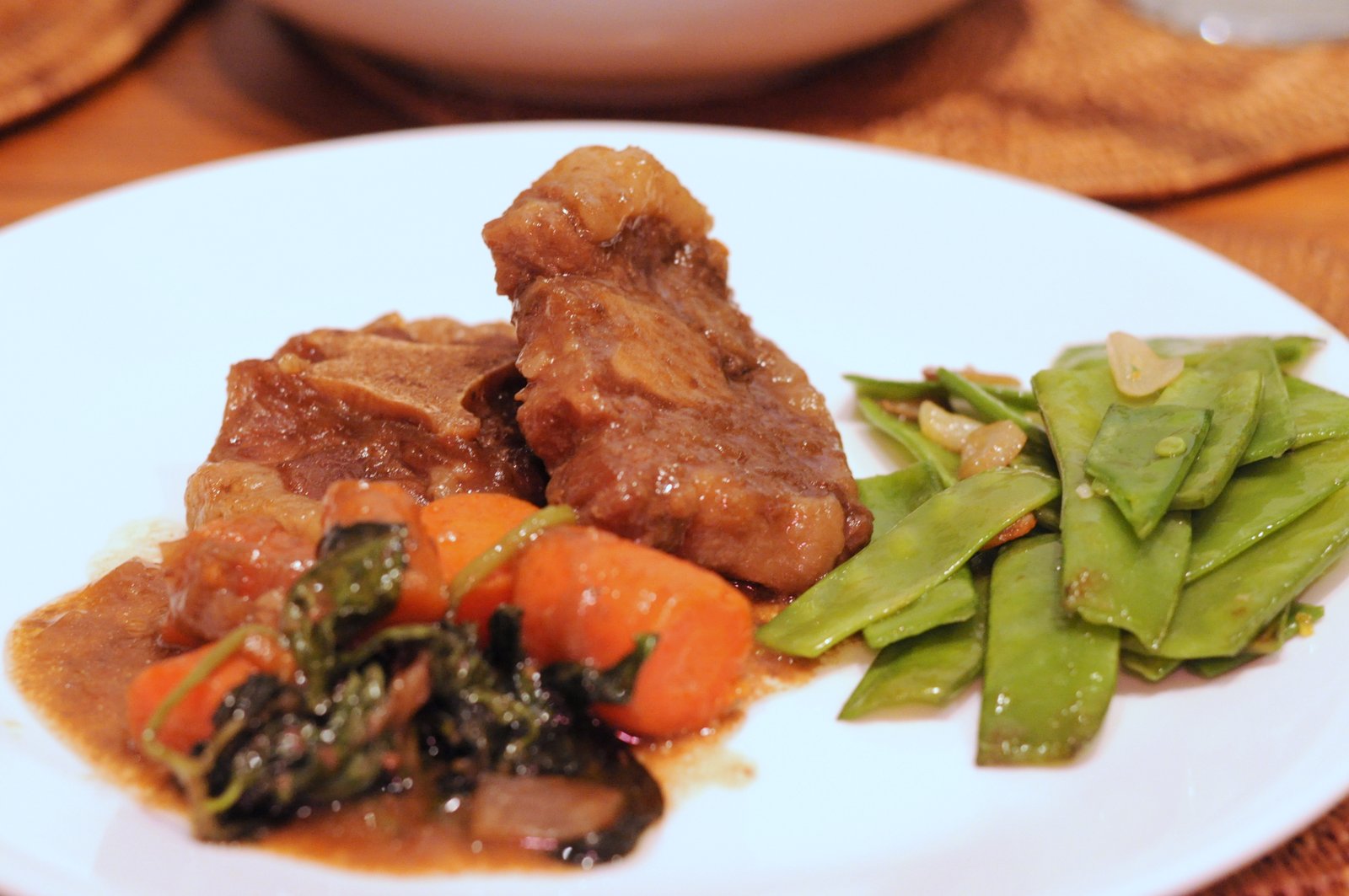
Short Rib Adobo (click for recipe)

Steamed Choysum with Sauteed Ginger

Adobo Fried Rice and Sauteed Eggs (click for recipe)
Kale Salad (click for recipe)

More sopressata, grape tomatoes, cheese.

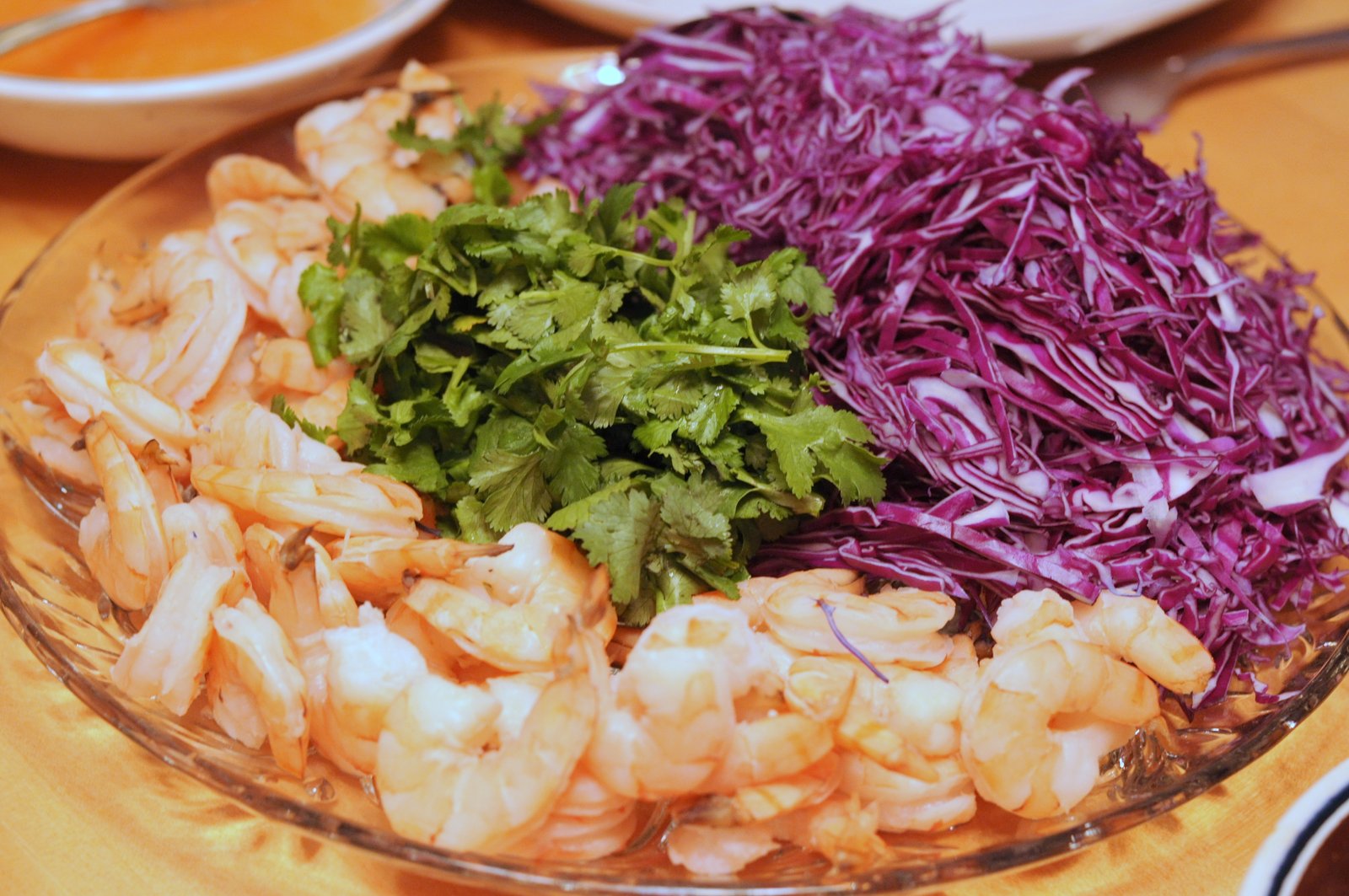
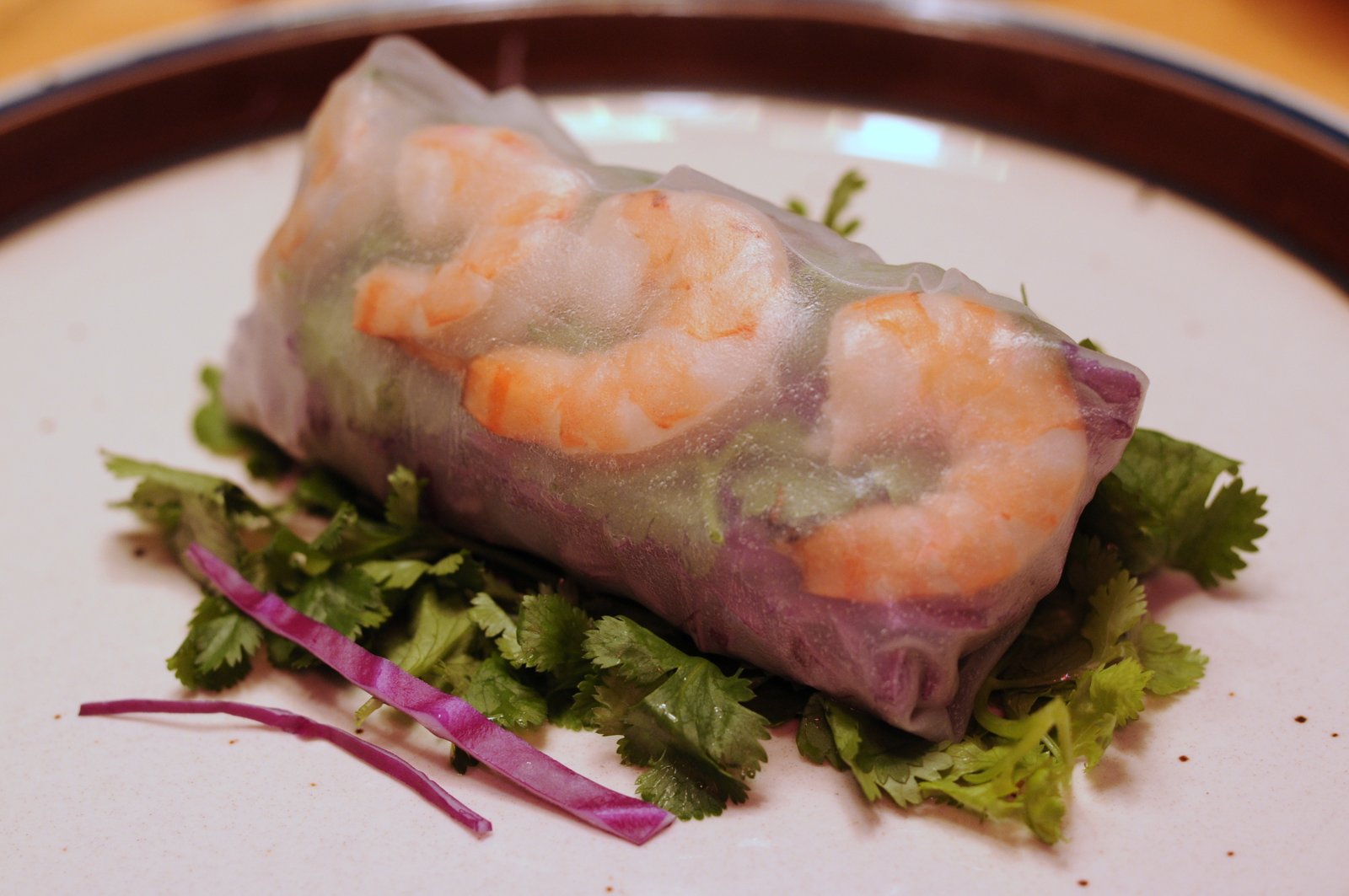
Vietnamese Summer Rolls (click for recipe)

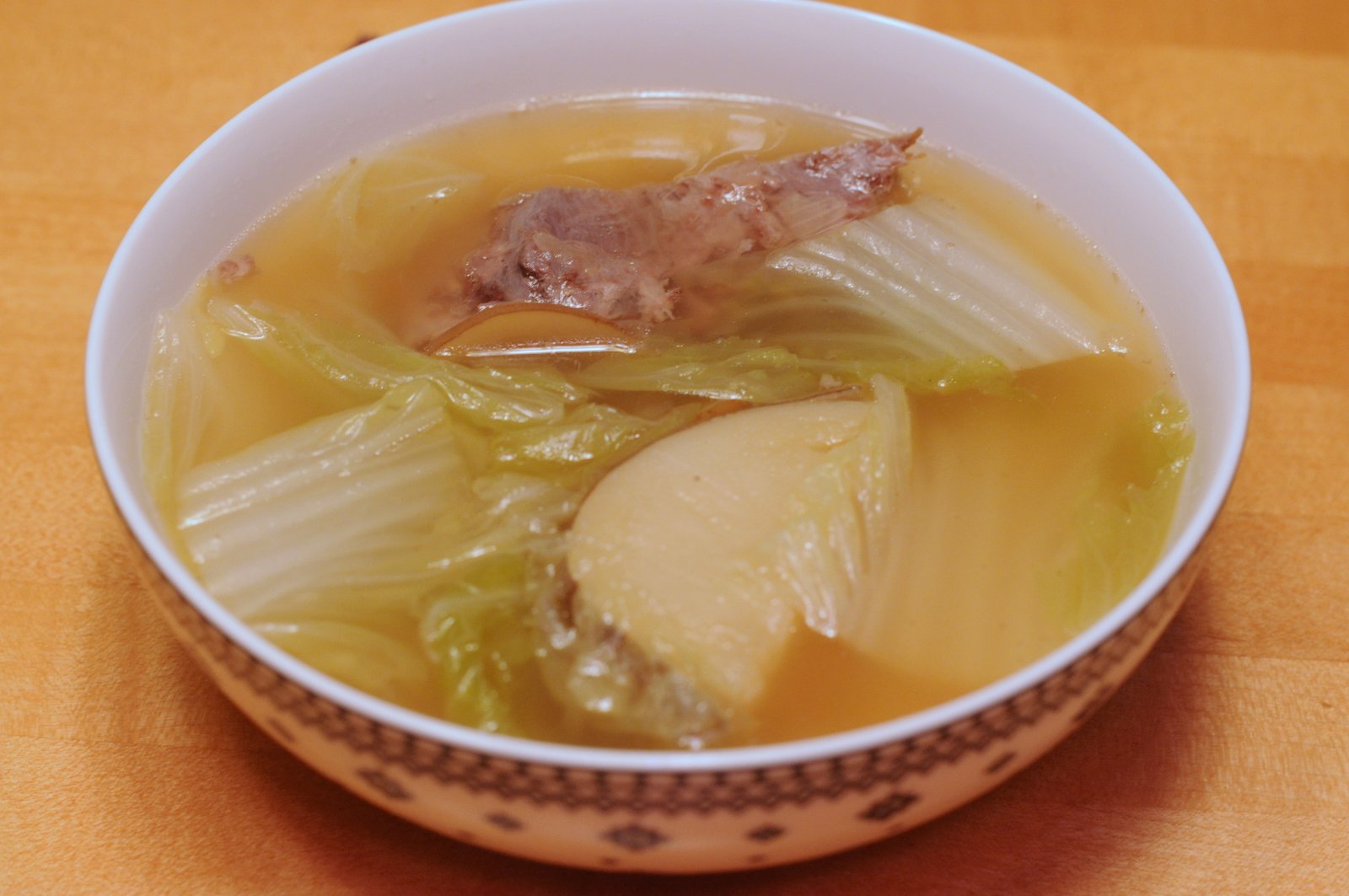
Beef Nilaga (click for recipe)

Baked Bronzino, Bronzini, Branzino

Why is a fish dish often met with a “Wow!”? Is it because they are so delicate to make, or so hard to procure? When I moved to NY ten years ago I was amazed at how much fish dishes cost on restaurant menus, as well as their tendency to underwhelm a person who grew up in a tropical country heavy with coastlines, where fish was the poor man’s food and cooking them second nature.

Most of our fish purchases in New York were made in Chinatown, where one should only buy fish they intend to consume that day. Enter our discovery of Fresh Direct‘s Seafood Section, where the freshness and prices are unparalleled in these parts. It was a love that began with a whole baked bronzino introduced by our friend Ching-i, a dish whose simplicity I’ll share with you now.

Baked Bronzino

Ingredients:

1 whole bronzino, head-on
lemon slices
ginger slices
scallions
olive oil
rock salt

Pre-heat oven to 400C. Arrange fish in a glass baking dish along with the other ingredients and bake for 20-25 minutes until meat is no longer translucent. Remove promptly and let rest for 5-10 minutes.

Serve with vegetables and rice.

Is that easy or what?

Related Posts Plugin for WordPress, Blogger...